


















































































































































































HomeBlog & GuidesGuidesMetal Fabrication
Carbide Burrs for Aluminum: Why Double Cut Clogs and What to Use
Why a double cut burr clogs on aluminum, which aluminum cut shape to buy for each job, set vs singles math, and the speeds that keep the flutes clear.
Quick answer: The best carbide burr for aluminum is an aluminum cut burr, also called a non-ferrous or "NF" cut. It has a few wide, open flutes, so soft aluminum chips throw clear instead of welding into the tool. A standard double cut burr clogs on aluminum within seconds. For a single burr, the Walter 01V054 (1/2 in. cylinder, $63.86) covers most flat work and weld blending. For a full kit, the Drillco No. 10 set (8 aluminum cut burrs, $303.38, made in the USA) or the Walter 01V995 kit (5 burrs, $393.42) gives you every common shape. Run light pressure, keep the burr moving, and use stick wax.
What is the best carbide burr for aluminum?
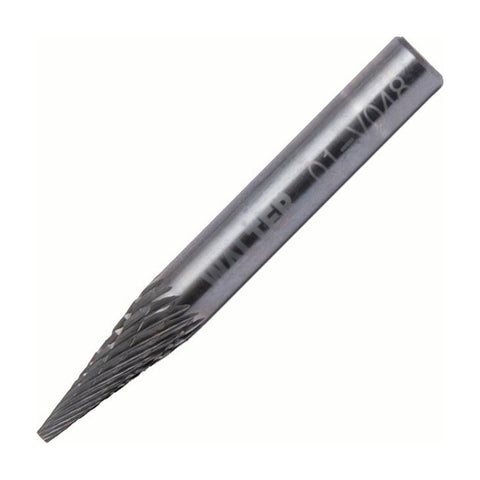
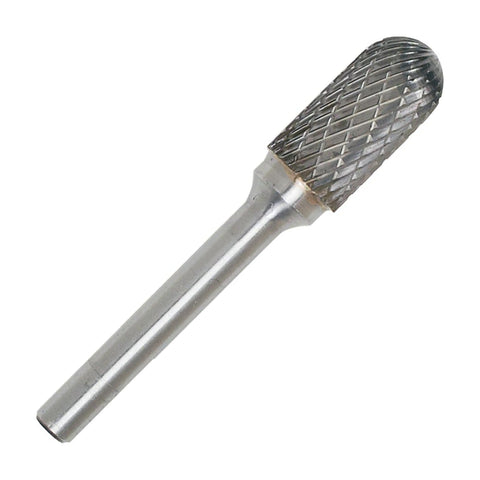
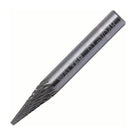
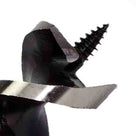
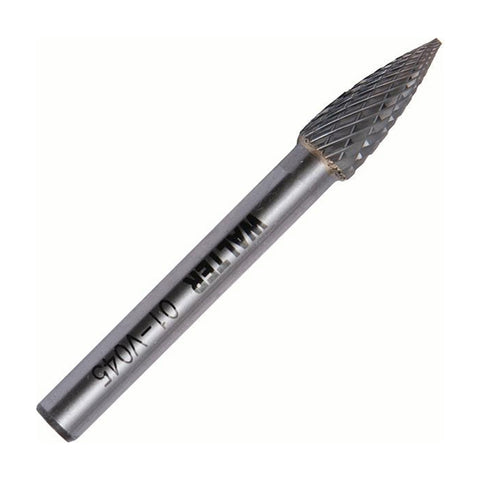
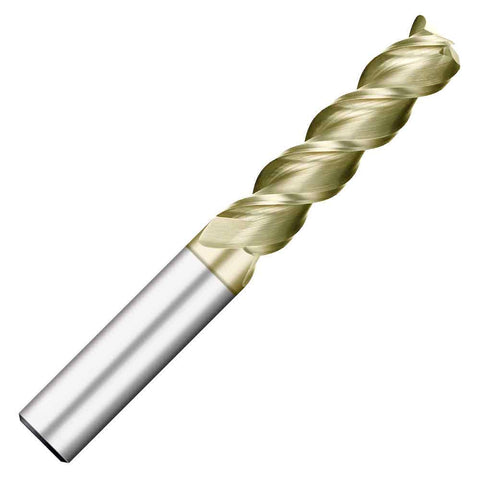
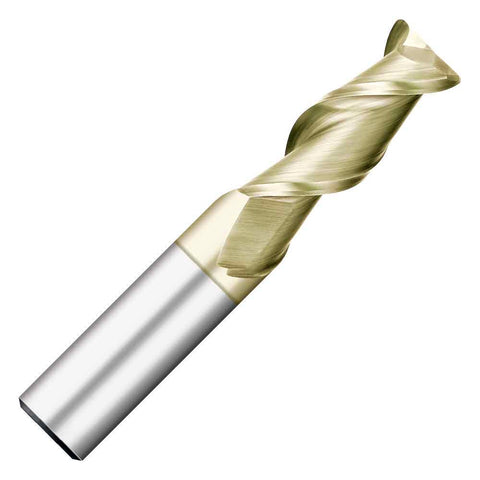
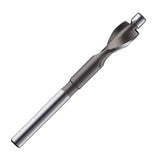
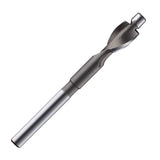
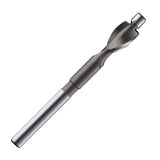
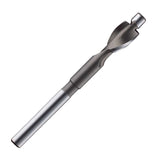
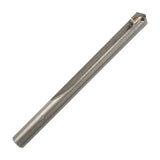
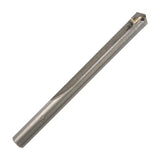
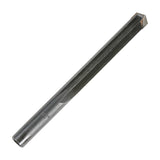
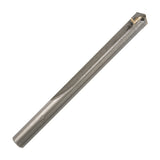
The best carbide burr for aluminum is an aluminum cut (non-ferrous) carbide burr. Walter, PFERD and Drillco all make one, sometimes labelled "ALU", "NF" or "non-ferrous cut". An aluminum cut burr has three to six wide flutes with deep gaps between them. A double cut burr for steel has dozens of small crossed teeth. The wide gaps give the soft, stringy aluminum chip somewhere to go.
The same aluminum cut carbide burr works on every soft metal: aluminum, brass, copper, bronze, magnesium and zinc. It also cuts carbon fiber, fiberglass and hard plastics. We stock 12 single aluminum cut burrs from Walter in our aluminum and non-ferrous carbide burrs collection, plus two aluminum cut carbide burr sets.
Why does a double cut carbide burr clog on aluminum?
A double cut carbide burr clogs on aluminum because aluminum is soft and melts at about 1,220°F, far below steel. The heat of cutting softens the chip, and the soft chip smears into the small gaps between the crossed teeth. Shops call this "loading" or "galling". Once the teeth are packed, the burr stops cutting and starts rubbing. Rubbing makes more heat, which packs in more aluminum.
A loaded burr is easy to spot. The head looks silver instead of gray, the grinder chatters, and the work gets hot without much metal coming off. An aluminum cut burr avoids the problem because each chip has room to leave the flute before it can stick.
Aluminum cut vs single cut vs double cut: what is the difference?
The difference between aluminum cut, single cut and double cut carbide burrs is the number and shape of the flutes. Fewer, bigger flutes clear soft chips. More, smaller flutes give control and a finer finish on hard metal.
Cut |
Flutes |
Best on |
Finish |
Avoid on |
|---|---|---|---|---|
Aluminum cut (NF, ALU) |
Few, wide, open |
Aluminum, brass, copper, magnesium, zinc, carbon fiber, plastics |
Medium |
Steel, stainless, cast iron |
Single cut |
One set, spiral |
Steel, cast iron, fast stock removal |
Coarse, long chips |
Aluminum (loads) |
Double cut (diamond cut) |
Two crossed sets |
Steel, stainless, cast iron, weld blending |
Fine, small chips |
Aluminum (loads fast) |
If you grind both steel and aluminum, keep two sets of burrs and never share them. Steel dust left in an aluminum cut burr is not the problem; chipped edges are. The big open teeth of an aluminum cut burr are thin and can chip on hard steel.
Which aluminum cut carbide burr shape do I need?
The aluminum cut carbide burr shape you need depends on the surface you are working. A cylinder (SA) handles flat faces and edges, a ball nose (SC) blends into corners, a tree (SF) shapes contours and a cone (SL) chamfers and countersinks. Every burr below is a Walter solid carbide burr on a 1/4 in. shank, sold one at a time, so it fits any standard die grinder.
Shape (code) |
Head size |
Use it for |
Walter SKU |
Price each |
|---|---|---|---|---|
Cylindrical (SA-5) |
1/2 x 1 in. |
Flat faces, weld blending, edges |
$63.86 |
|
Cylindrical (SA-3) |
3/8 x 3/4 in. |
Smaller flats and slots |
$100.02 |
|
Cylindrical, end cut (SB-3) |
3/8 x 3/4 in. |
Square shoulders, cutting into a corner |
$86.85 |
|
Ball nose (SC-1) |
1/4 x 5/8 in. |
Small fillets and inside radii |
$39.34 |
|
Ball nose (SC-3) |
3/8 x 3/4 in. |
Blending welds into corners |
$45.68 |
|
Ball nose (SC-5) |
1/2 x 1 in. |
Large fillets, port and casting work |
$174.02 |
|
Ball (SD-5) |
1/2 x 1/2 in. |
Hollows, concave cuts, cavities |
$41.75 |
|
Egg / oval (SE-5) |
1/2 x 7/8 in. |
Shallow pockets, smooth contours |
$54.32 |
|
Round nose tree (SF-3) |
3/8 x 3/4 in. |
Contours, rounding edges |
$41.00 |
|
Round nose tree (SF-5) |
1/2 x 1 in. |
Larger contours and castings |
$157.35 |
|
Cone, 14° (SL-3) |
3/8 x 1-1/4 in. |
Narrow angles, slots, tight spots |
$100.02 |
|
Cone, 14° (SL-4) |
1/2 x 1-1/8 in. |
Chamfers and angled edges |
$65.35 |
Prices checked on eldoradotools.com on Oct 12, 2026.
If you only buy one aluminum cut burr, buy the SA-5 cylinder (01V054). A cylinder does most of the work on aluminum: flattening welds, cleaning saw cuts and breaking sharp edges. Add an SC-3 ball nose (01V061) when you need to blend a weld into an inside corner.
Should I buy an aluminum cut carbide burr set or single burrs?
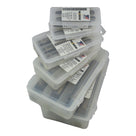
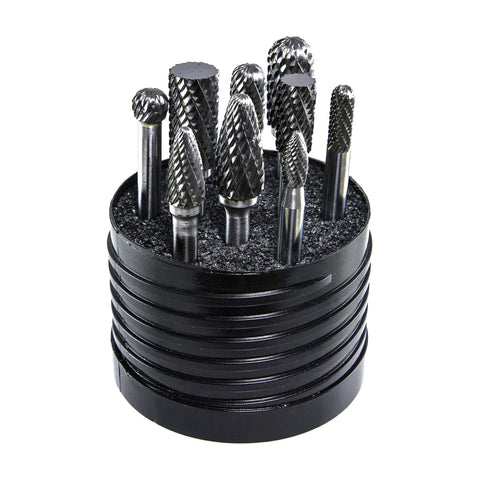
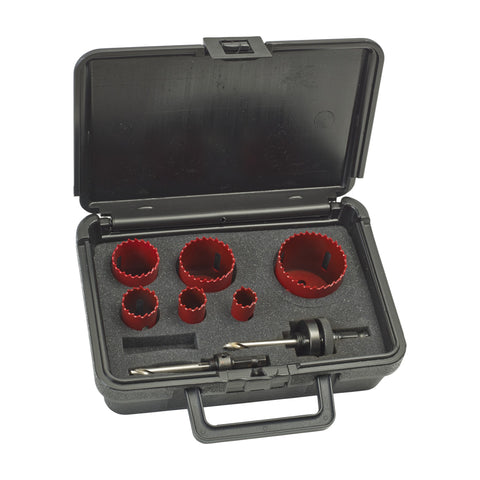
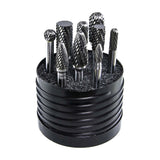
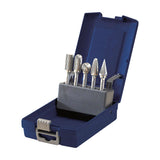
Buy an aluminum cut carbide burr set if you need more than three shapes. A set costs far less per burr than buying the same shapes one at a time. We carry two aluminum cut sets, and both come in a moulded case.
Set |
Burrs |
Price |
Per burr |
Made in |
|---|---|---|---|---|
8: SA-3, SA-5, SC-3, SC-5, SD-3, SF-3, SF-5, SL-3, 3/8 to 1/2 in., 1/4 in. shank |
$303.38 |
$37.92 |
USA |
|
5: SC-5, SE-5, SF-3, SF-5, SL-4, 3/8 to 1/2 in., 1/4 in. shank |
$393.42 |
$78.68 |
China |
Prices checked on eldoradotools.com on Oct 12, 2026.
Here is the math. Seven of the eight shapes in the Drillco No. 10 set are sold singly as Walter aluminum cut burrs (01V003, 01V054, 01V061, 01V008, 01V065, 01V016 and 01V036). Those seven cost $681.95 bought one at a time. The set costs $303.38 and adds an eighth burr, the SD-3 ball. If you will use three or more of those shapes, the set pays for itself. The Walter 01V995 kit works the same way: its five burrs (01V008, 01V064, 01V065, 01V016 and 01V069) cost $492.04 bought singly, against $393.42 for the kit. It is the pick for shops standardized on Walter tooling who want one brand across their burrs.
Grinding steel too? The matching double cut kits are the Walter 01V990 (5 pieces, $402.49) and the Drillco No. 5 (10 pieces, $322.51). Browse all 19 in our carbide burr sets collection.
What speed should I run a carbide burr on aluminum?
Run a carbide burr on aluminum fast, inside the burr's rated speed, with light pressure. PFERD lists 16,000 to 30,000 RPM for a 1/2 in. (12 mm) aluminum cut burr and 12,000 to 22,000 RPM for a 5/8 in. (16 mm) one. Smaller heads run faster. Never go above the maximum for the head size: 66,000 RPM at 3/8 in. and 50,000 RPM at 1/2 in., per our carbide burrs safety notes.
Head diameter |
Working range on aluminum (PFERD) |
Never exceed |
|---|---|---|
1/4 in. (6 mm) |
32,000 to 59,000 RPM |
70,000 RPM |
1/2 in. (12 mm) |
16,000 to 30,000 RPM |
50,000 RPM |
5/8 in. (16 mm) |
12,000 to 22,000 RPM |
40,000 RPM |
Three habits keep an aluminum cut burr cutting:
Keep it moving. A burr that sits in one spot heats the aluminum and starts to load.
Let the flutes cut. Pushing harder makes heat, not chips. If the grinder slows down, back off.
Use a lubricant. Stick wax, WD-40 or a cutting lubricant made for aluminum, touched to the burr every minute or so, keeps chips from sticking.
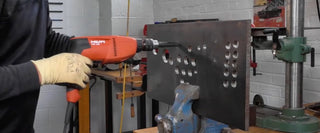
Do not run a carbide burr in a drill. A drill turns 2,000 to 3,000 RPM, far too slow for a burr, so it grabs and tears the aluminum. Use an air or electric die grinder.
Speeds for drills and hole saws are in our drill speed chart.
Can I use an aluminum cut carbide burr on steel?
No, an aluminum cut carbide burr should not be used on steel, stainless or cast iron. The few large teeth are thin, take too big a bite in hard metal, and chip. Use a double cut burr on steel, such as the Walter 01V004 1/2 in. cylinder ($88.95), the double cut twin of the 01V054. Our double cut carbide burrs come in every head shape.
Why is my carbide burr not cutting aluminum?
Problem |
Likely cause |
Fix |
|---|---|---|
Burr head looks silver and smooth |
Aluminum loaded into the flutes |
Switch to an aluminum cut burr. Clean the loaded one by soaking it in lye (sodium hydroxide) drain cleaner, which dissolves aluminum but not carbide |
Grinder chatters or bounces |
Loaded burr, or too much pressure |
Lighter pressure, keep moving, add wax |
Work turns hot, little metal comes off |
Burr rubbing, not cutting |
Check for loading; raise the speed inside the rating |
Chipped teeth |
Aluminum cut burr used on steel, or dropped |
Keep aluminum and steel burrs apart |
Rough, torn finish |
Speed too low for the head size |
Raise speed toward the PFERD range above |
What is the most common mistake when burring aluminum?
The most common mistake when burring aluminum is grabbing the double cut burr that is already in the die grinder from the last steel job.
"When a customer calls about a carbide burr that stopped cutting, it is almost never a bad burr. It is a double cut burr that went from a steel job straight onto aluminum and packed solid in the first minute. Keep a separate aluminum cut burr in the drawer and that call goes away."
David Castro, Eldorado Tools
FAQ
What carbide burr is best for aluminum?
An aluminum cut (non-ferrous) carbide burr is best for aluminum. Its few wide flutes clear soft chips so the burr does not clog. A 1/2 in. cylinder such as the Walter 01V054 is the most useful single shape.
Can you use a double cut carbide burr on aluminum?
A double cut carbide burr will cut aluminum for a few seconds, then clog. The crossed teeth pack with soft metal and the burr starts rubbing. Use an aluminum cut burr instead.
What is an NF carbide burr?
NF stands for non-ferrous. An NF carbide burr is the same thing as an aluminum cut burr, made for aluminum, brass, copper and other metals without iron.
How do you keep a carbide burr from clogging on aluminum?
Use an aluminum cut burr, run it fast inside its rated speed, keep light pressure, keep it moving, and touch stick wax to the burr often.
Does an aluminum cut burr work on brass and copper?
Yes. An aluminum cut burr works on aluminum, brass, bronze, copper, magnesium and zinc, plus carbon fiber, fiberglass and hard plastics.
What size shank do these burrs have?
Every aluminum cut burr and set in this guide has a 1/4 in. shank, which fits a standard air or electric die grinder.
How many burrs are in a carbide burr set for aluminum?
The Drillco No. 10 set has 8 aluminum cut burrs from 3/8 to 1/2 in. The Walter 01V995 kit has 5: SC-5 ball nose, SE-5 egg, SF-3 and SF-5 trees, and an SL-4 cone. Both come in a moulded case.
Questions about a job? Call our team at (833) 4-ETOOLS or email sales@eldoradotools.com.
First published Oct 12, 2026, with prices checked on the store that day.