






















































































































































































HomeBlog & GuidesGuidesGlass & Shower
Diamond End Mill Guide: Enlarge and Finish Holes in Tile
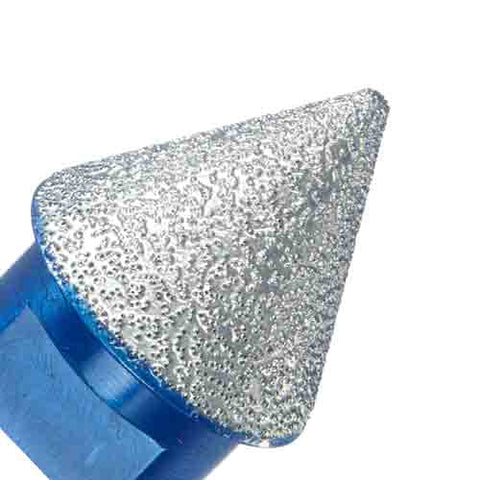
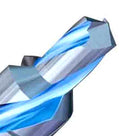
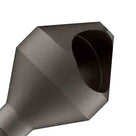
A diamond end mill makes an existing hole in porcelain, granite or quartz bigger or reshapes it; a diamond countersink finishes the edge so screws can't crack it.
Quick answer: Use a diamond end mill to make an existing hole in porcelain, granite or quartz bigger, or to cut a notch or reshape an opening. It cuts sideways like a router bit, so you trace the line by hand. Then use a diamond countersink to round over the edge, so the glaze can't chip and a screw head can't crack it. Our ITM end mills run from 1/4 to 3 in. and thread onto an angle grinder (5/8"-11). With an adapter, a 1/2 in. drill or an SDS-Plus in rotation only also works. Keep the pressure light and sideways.
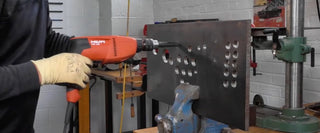
The valve is in, the tile is set, and the trim ring is 1/8 in. short of covering the hole. Or the countertop came with a faucet hole a size too small, or a hinge screw just popped a chip out of the glaze. None of these needs a new tile or a call to the fabricator. They need a tool that removes stone from the side of a hole, plus a tool that finishes the edge. That's all this guide covers. For drilling the hole in the first place, see How to Drill Through Tile and Porcelain.
Which fix do I need for the hole I have?
The fix you need depends on what's wrong with the hole: too small, the wrong shape, at the edge of the tile, or rough on top. Find your row. Each step uses one tool, and you only reach for a core bit when there's no hole yet.
Your situation |
Step 1 |
Step 2 |
Step 3 |
Watch out for |
|---|---|---|---|---|
Hole is too small (valve, pipe, faucet) |
DMC end mill that fits inside the hole: mill to a pencil line |
Countersink sized to the new hole: break the edge |
Test-fit the trim, then seal |
Light sideways pressure. Don't lever against the tile. |
Need a notch or half circle at the tile edge |
DMC end mill: trace the notch with the tile clamped face up |
Countersink or a light pass with the same mill to smooth the face |
Dry-fit before setting the tile |
Support the thin web of tile next to the notch. |
Need an oval, slot or rounded corner |
Core the largest round you can, or start from the existing hole |
DMC end mill: join and shape to the line |
Countersink the visible edge |
Mark the shape with a fine marker on tape. |
Hole edge is chipped or rough |
Countersink sized to the hole: two or three light turns |
Wipe and check under a light |
— |
Stop once the chip is gone. Deeper only weakens the edge. |
Screw or anchor must sit flush (hinges, grab bars) |
VT-1 countersink in a drill or impact: chamfer each 3/16 or 1/4 in. hole |
Drive the anchor, snug the screw by hand |
— |
A screw head bearing on raw glaze is what cracks the tile. |
No hole yet |
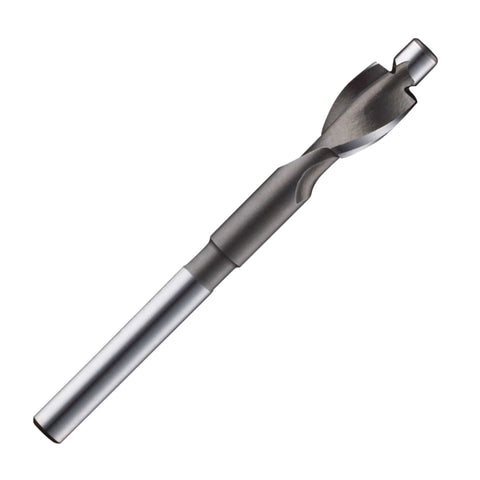
Diamond core bit at the final size |
Countersink the top edge |
— |
Drilling is covered in our how-to guide. |
What does a diamond end mill do that a core bit can't?
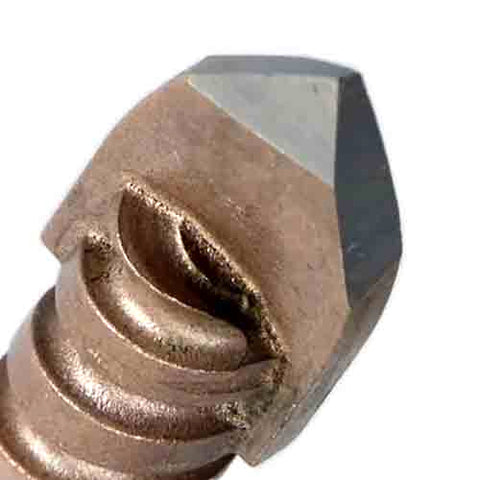
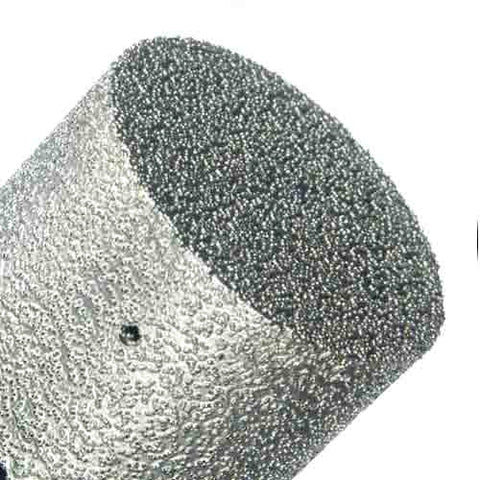
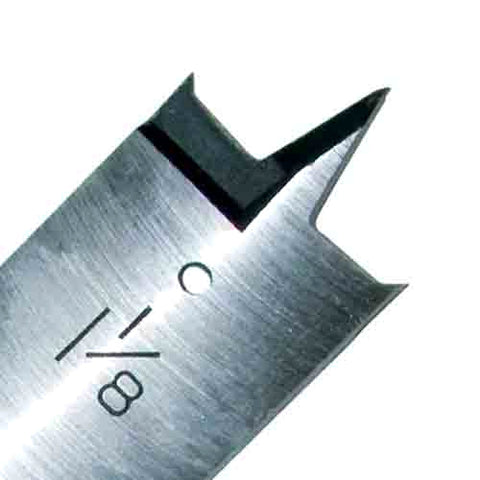
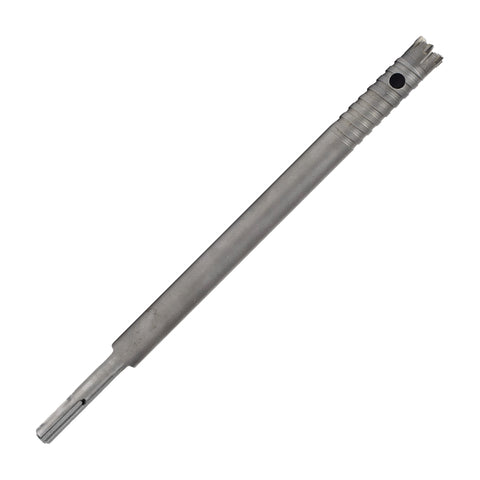
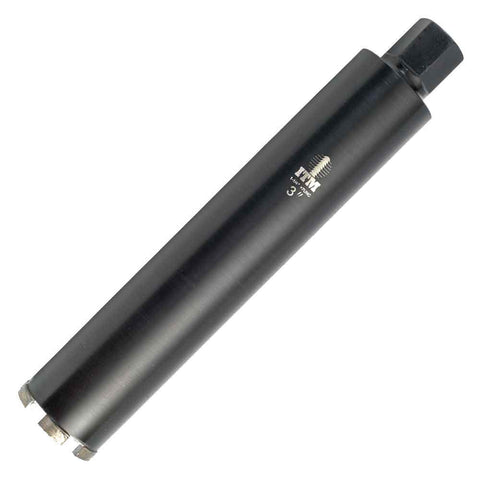
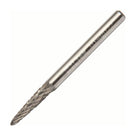
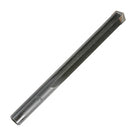
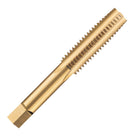
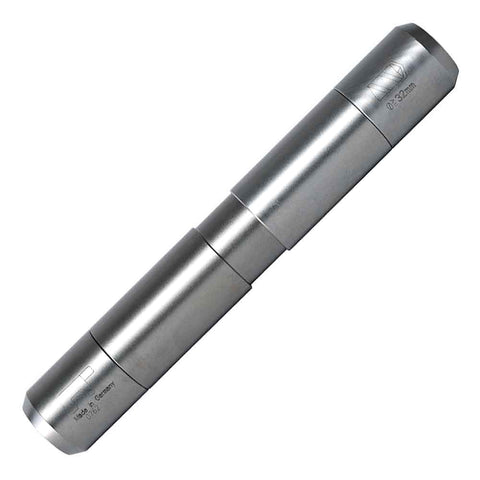
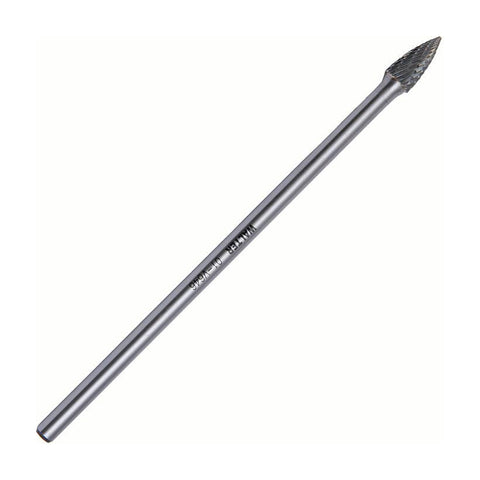
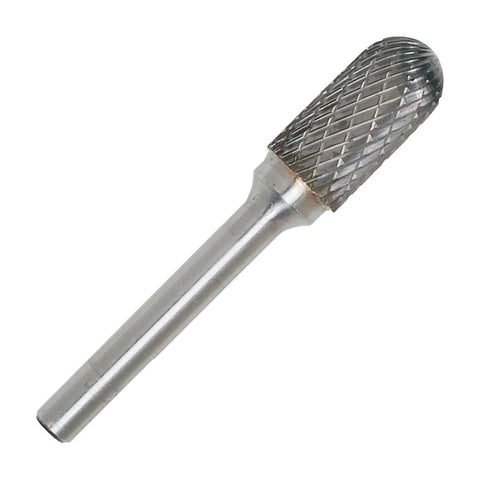
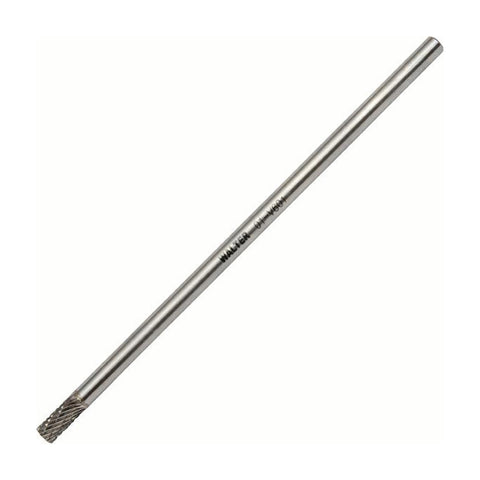
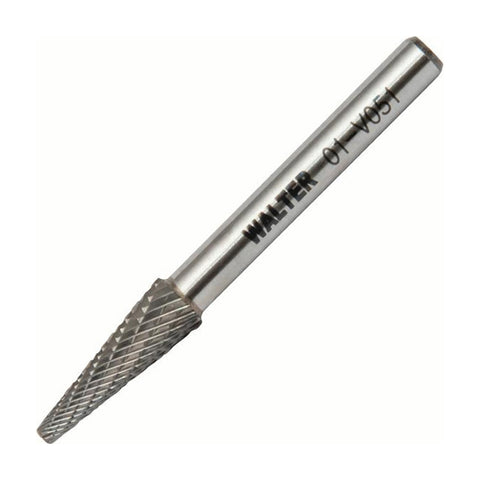
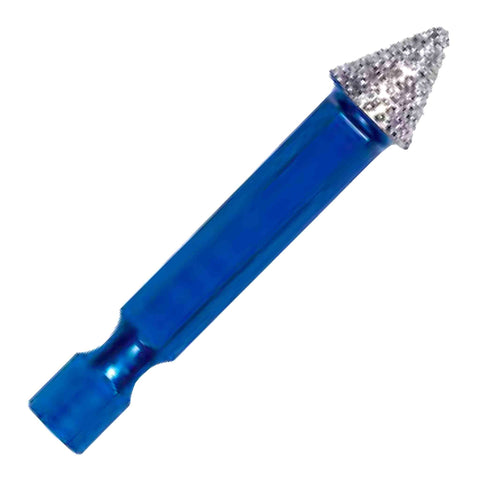
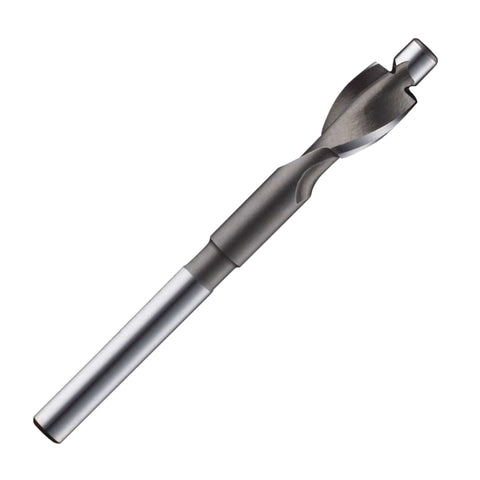
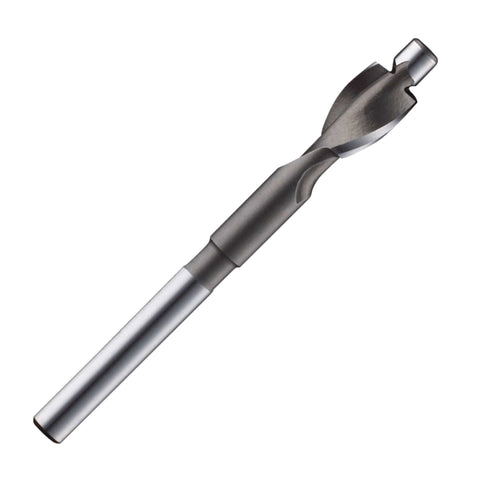
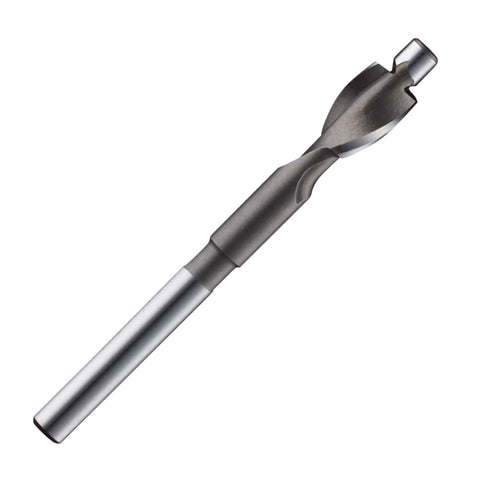
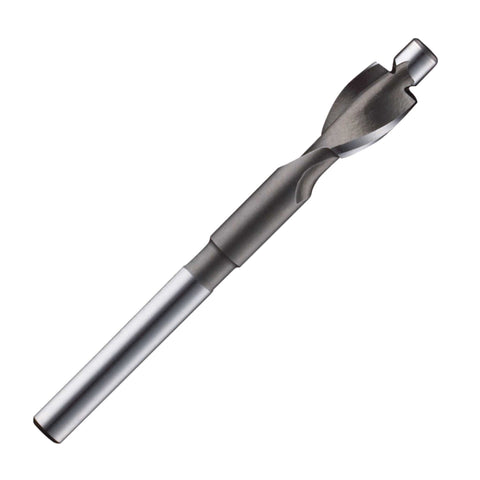
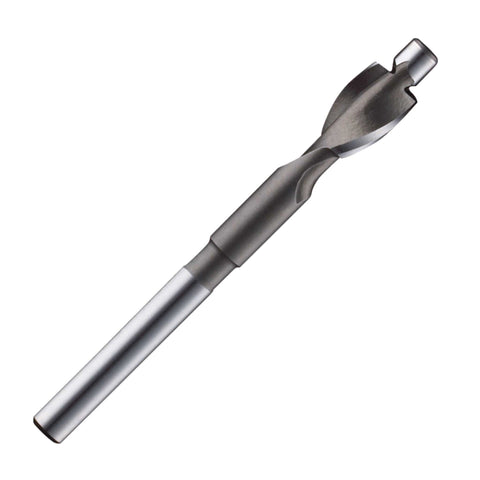
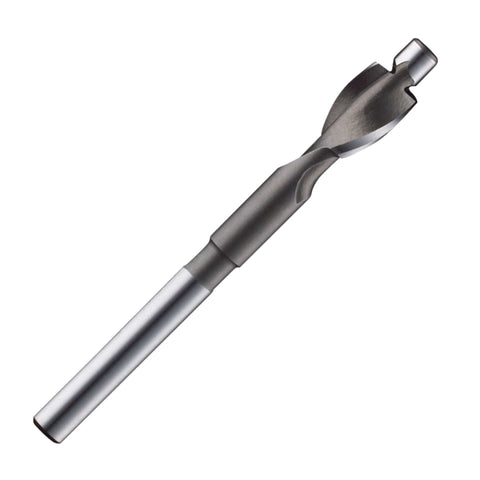
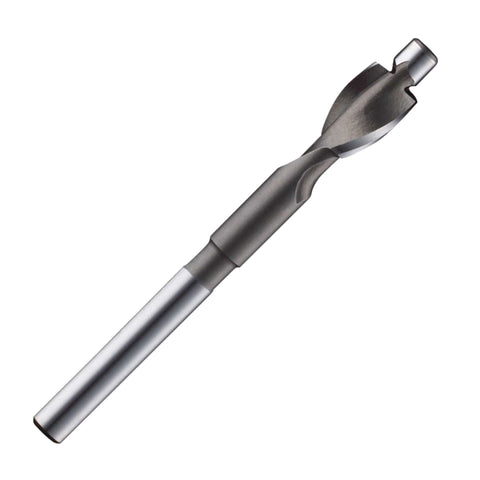
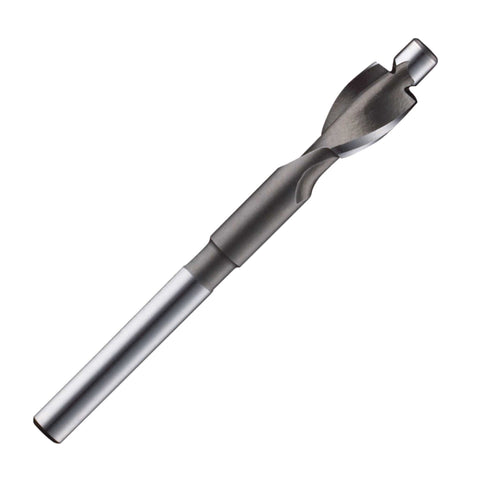
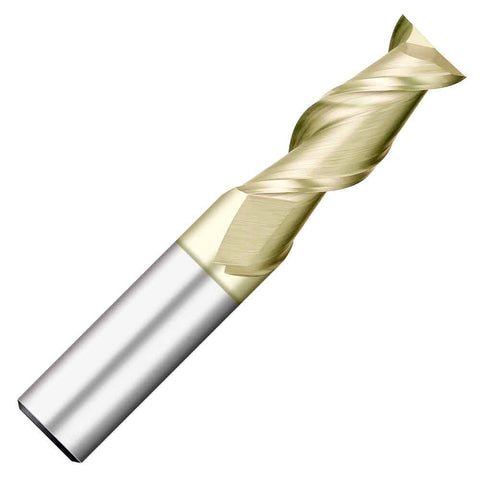
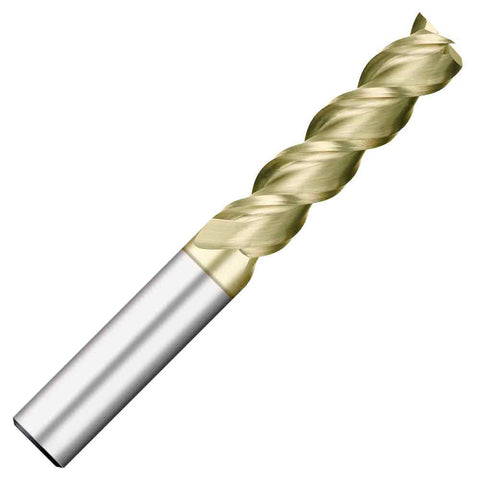
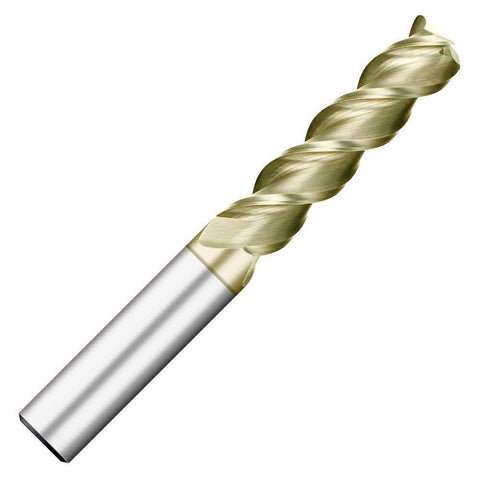
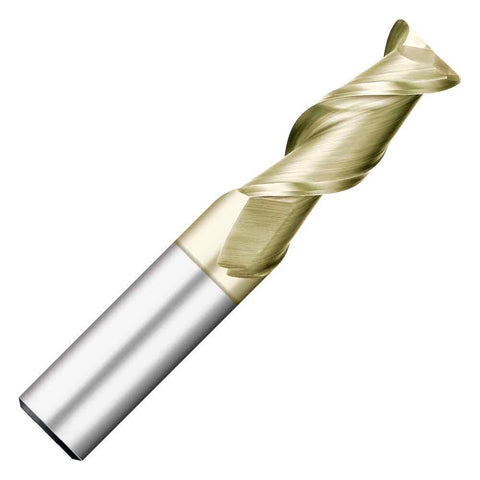
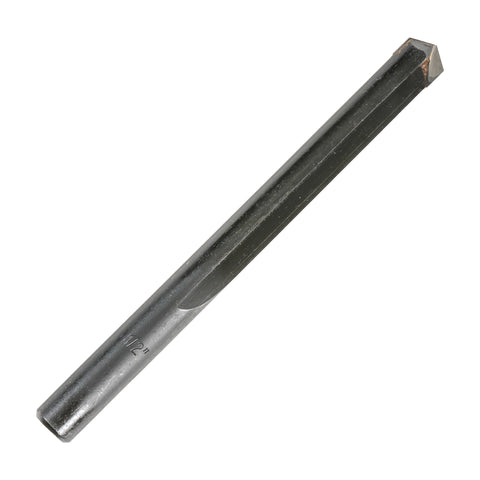
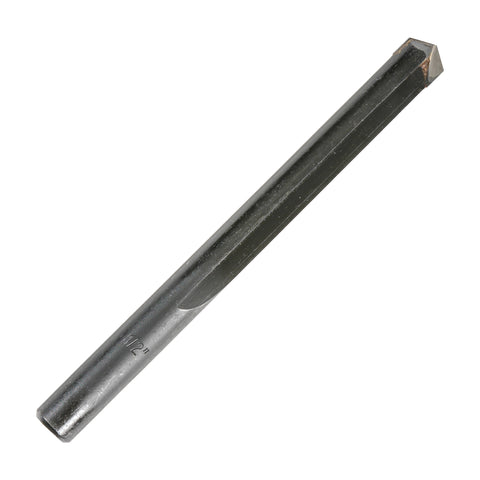
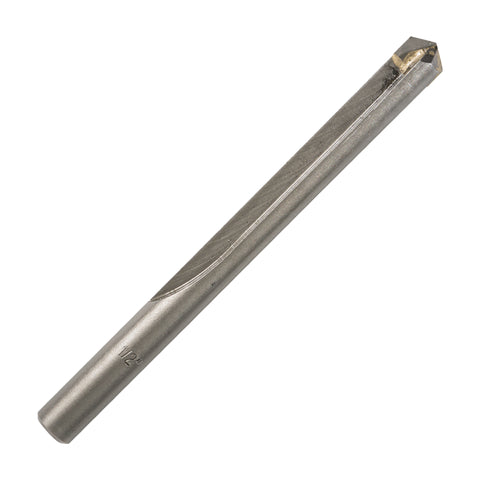
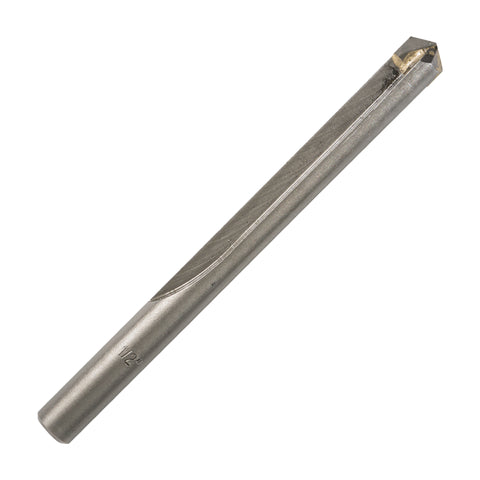
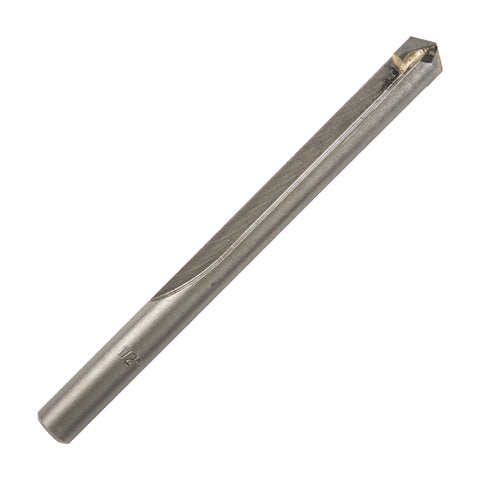
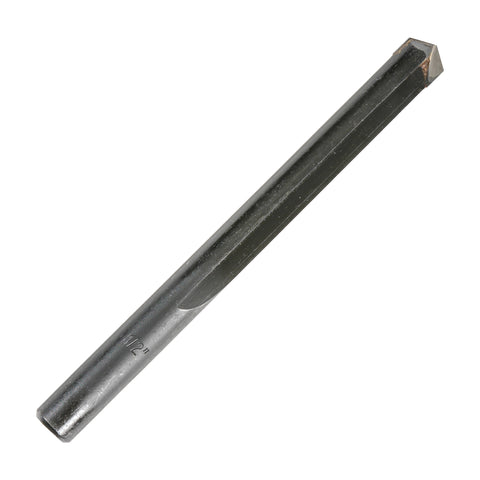
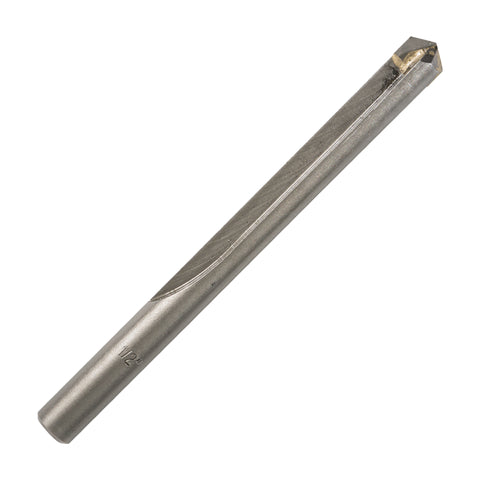
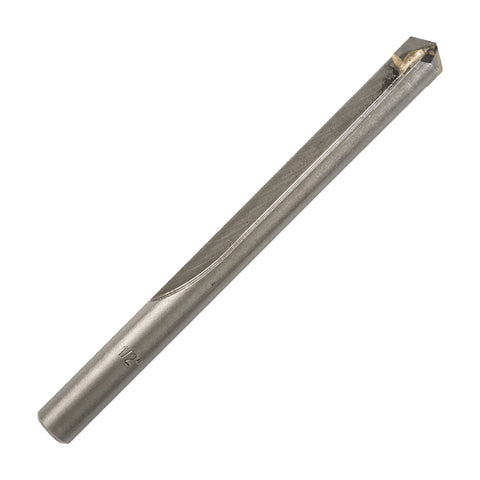
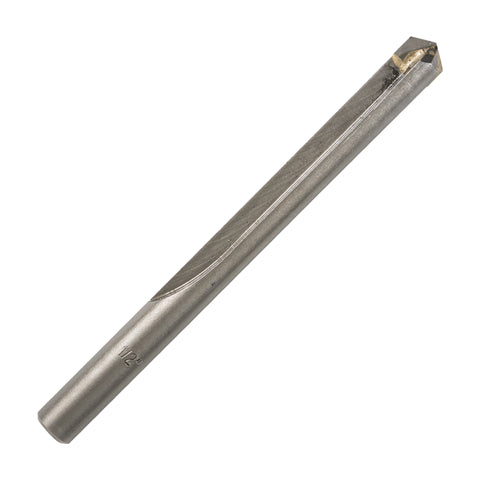
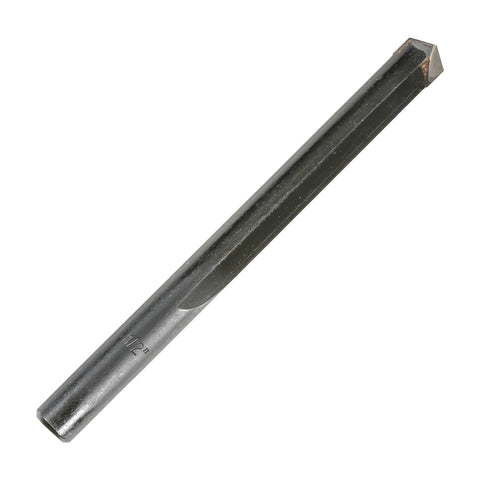
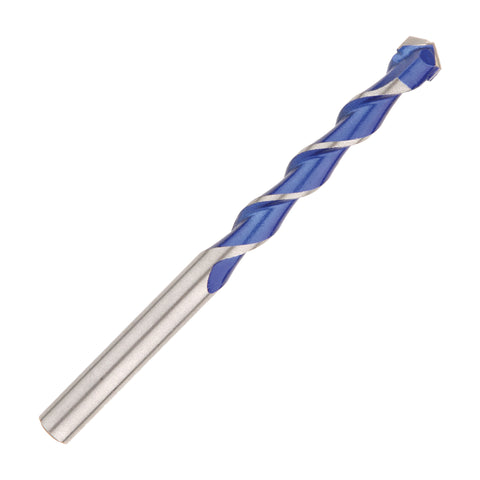
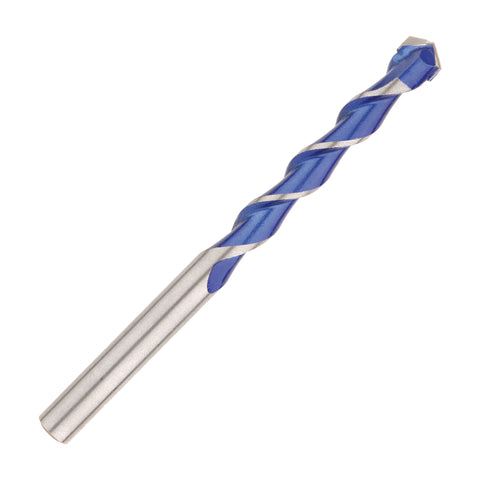
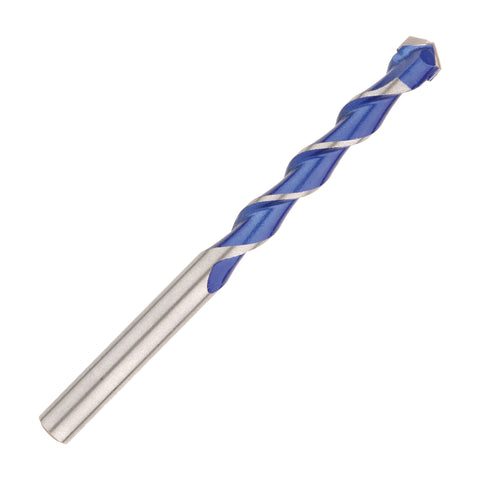
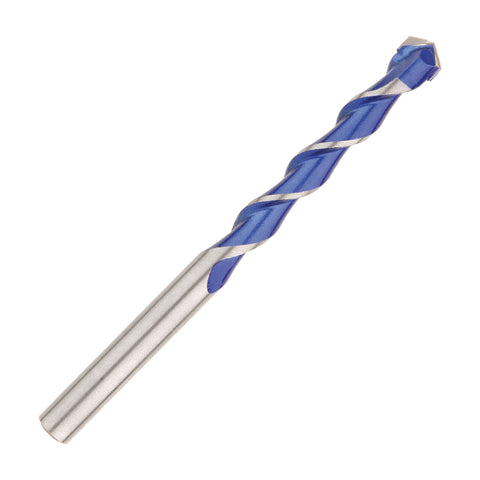
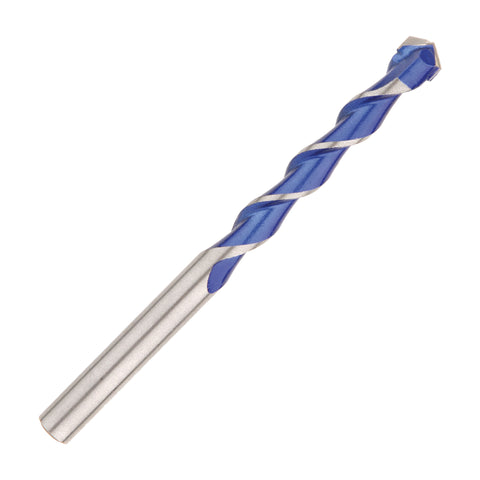
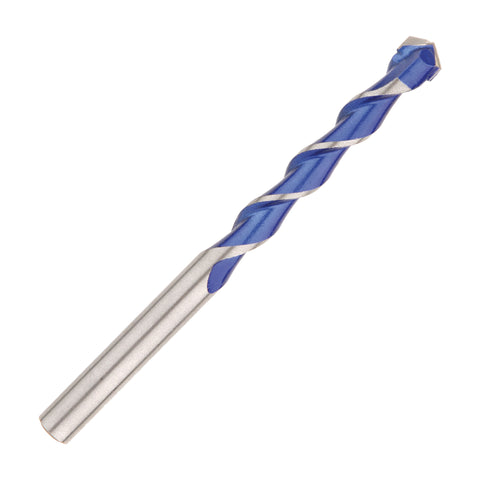
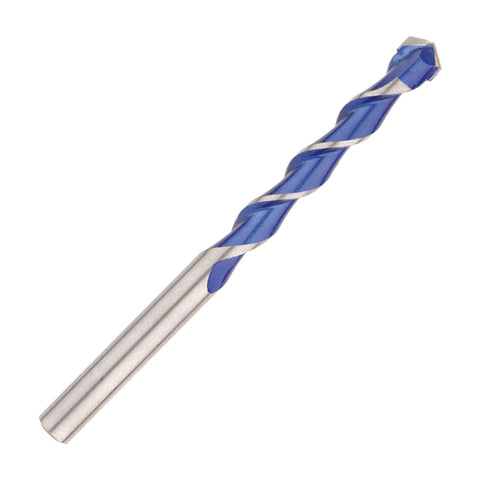
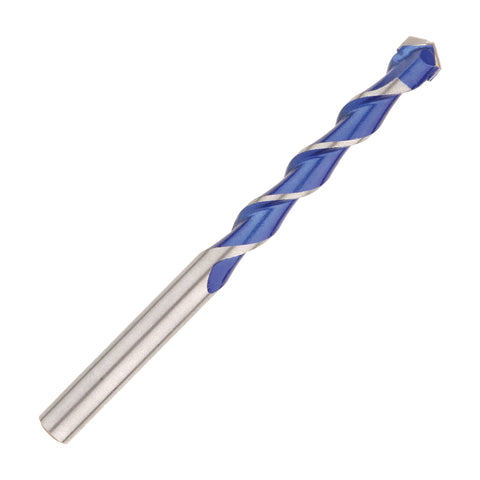
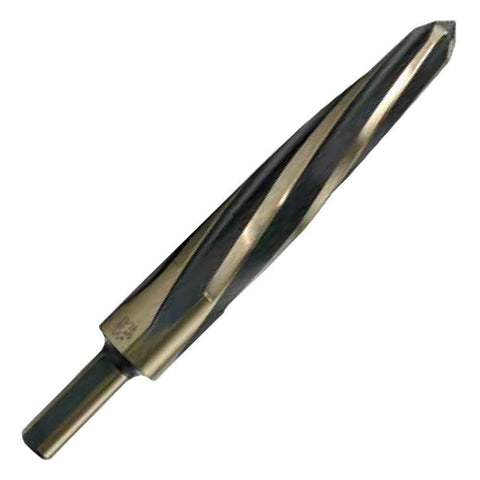
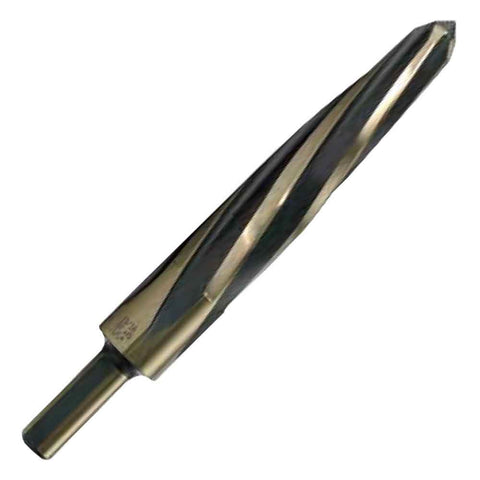
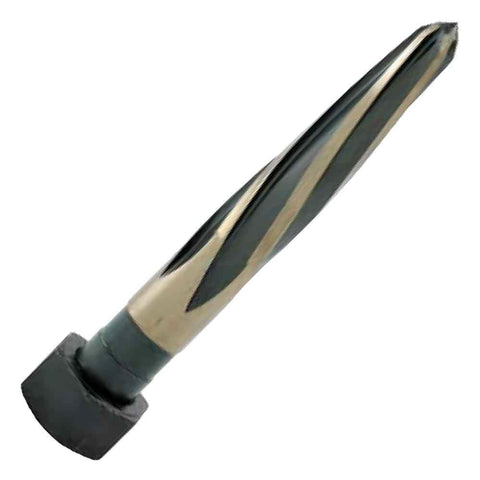
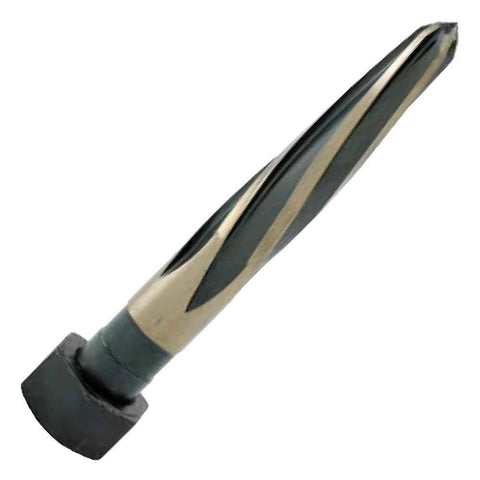
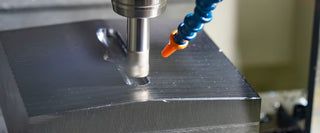
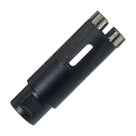
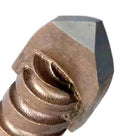
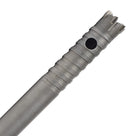
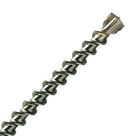
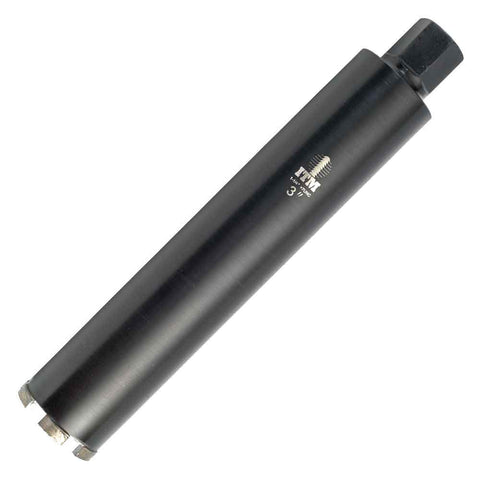
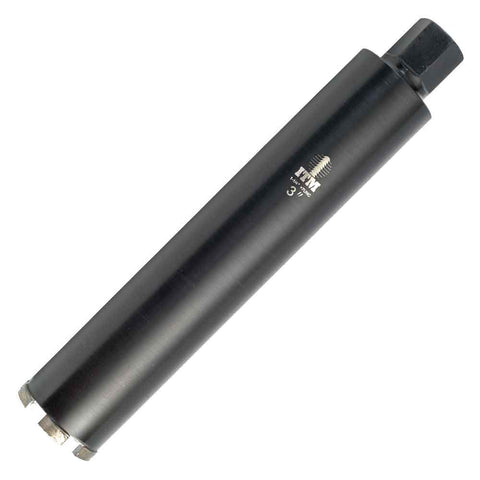
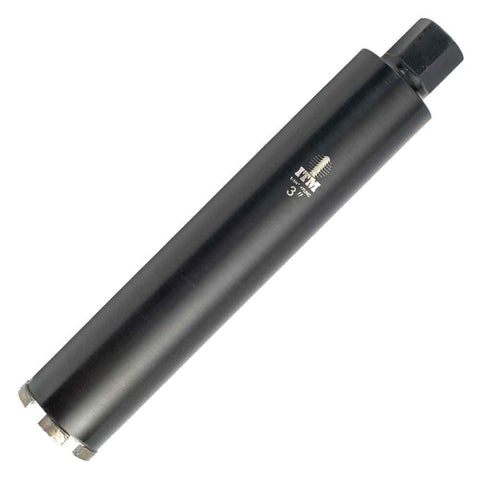
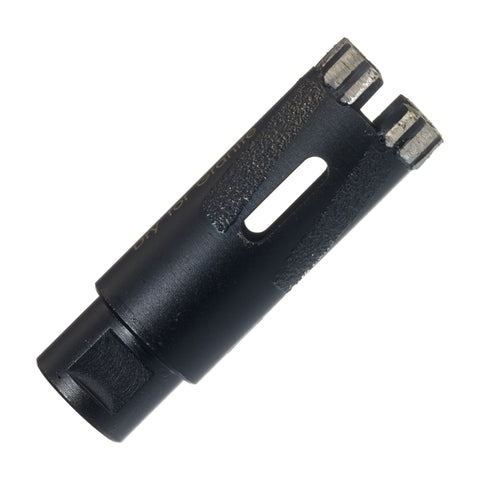
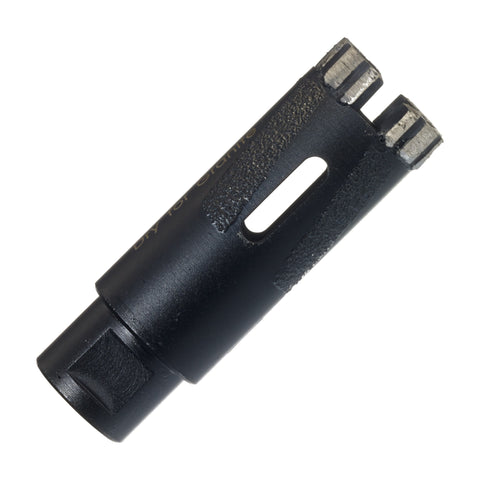
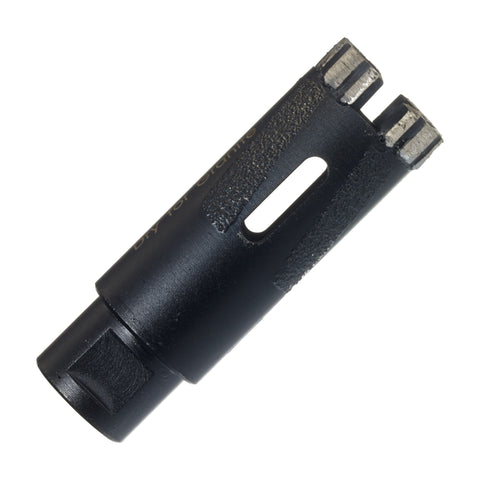
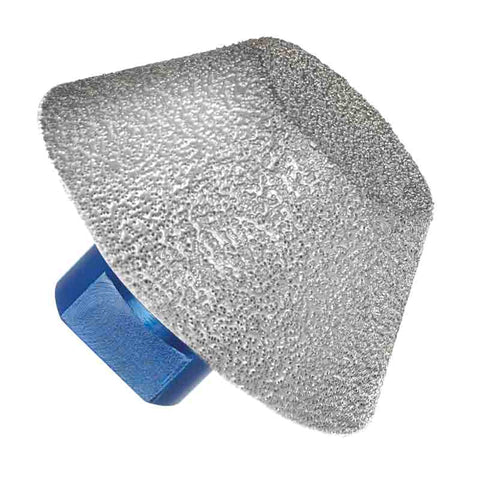
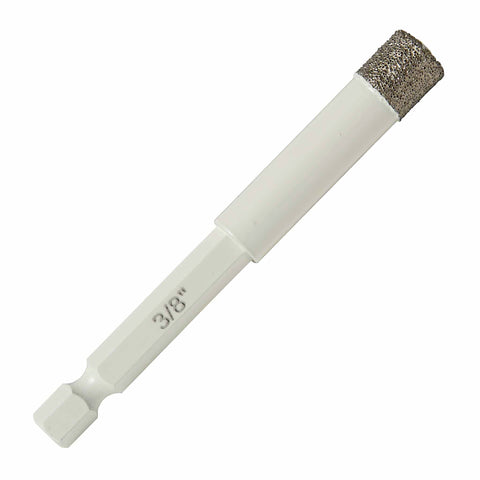
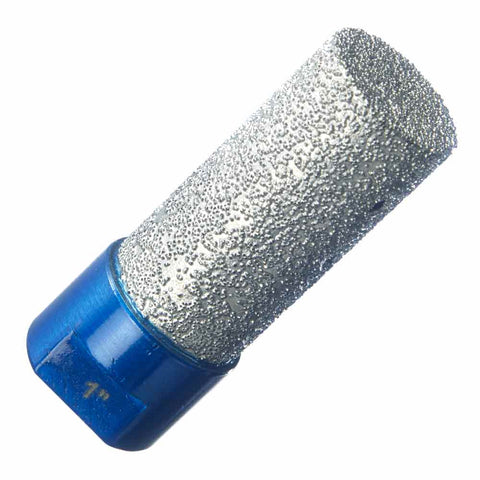
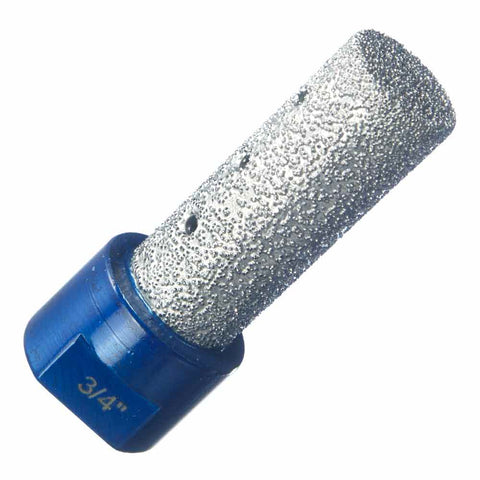
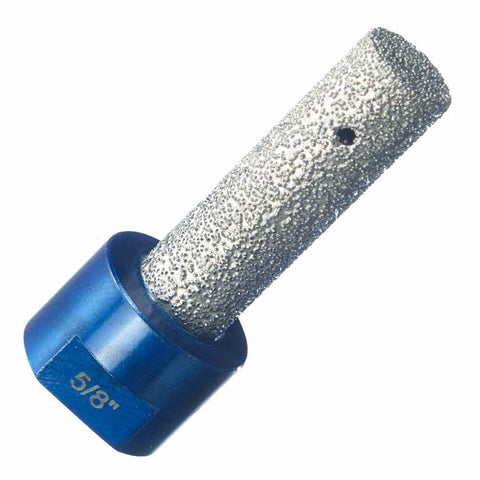
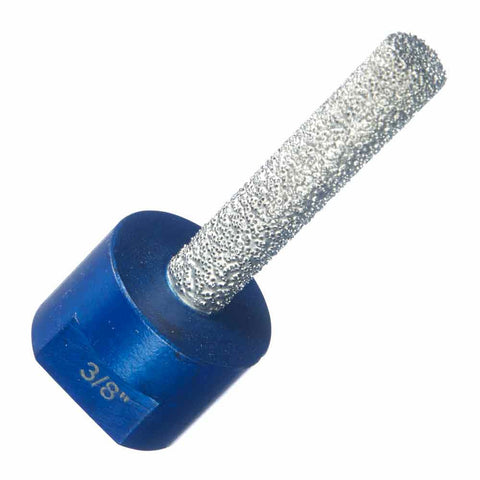
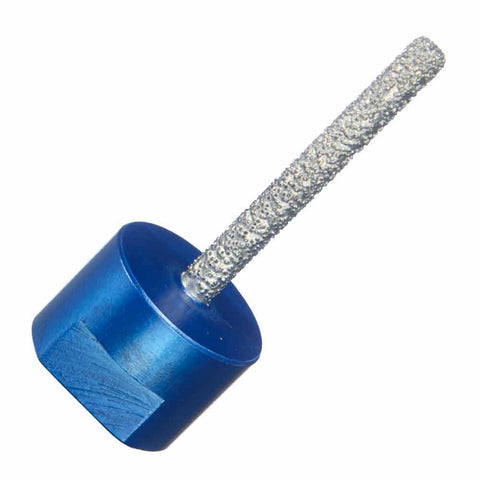
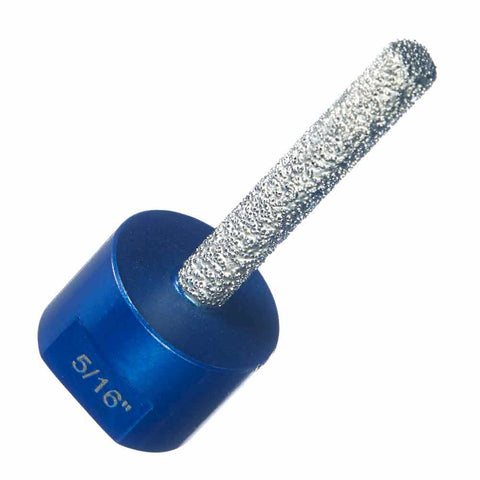
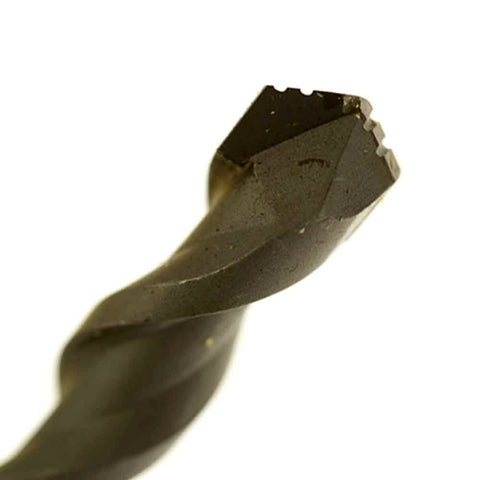
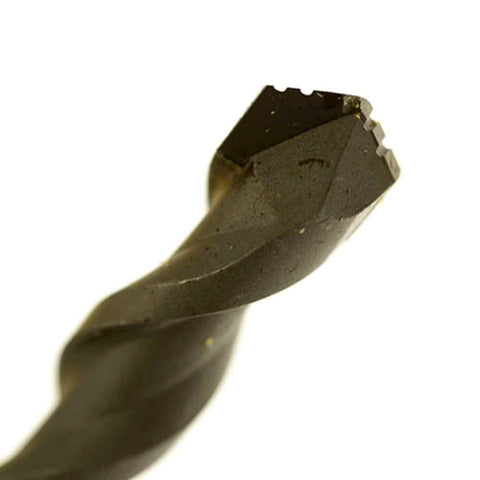
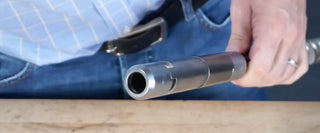
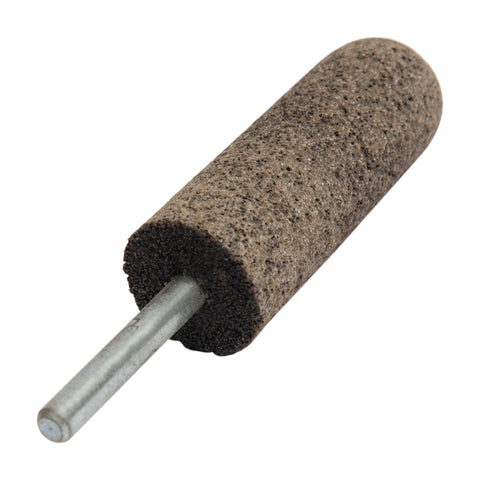
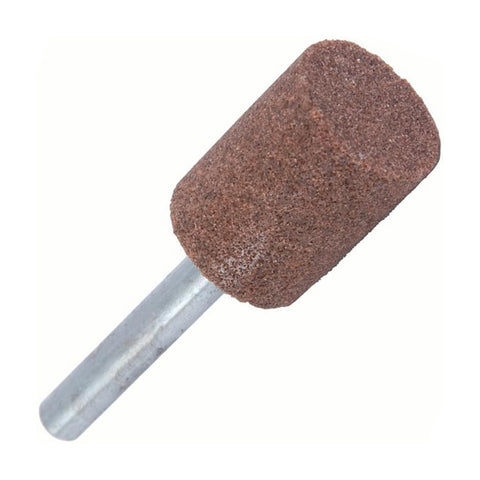
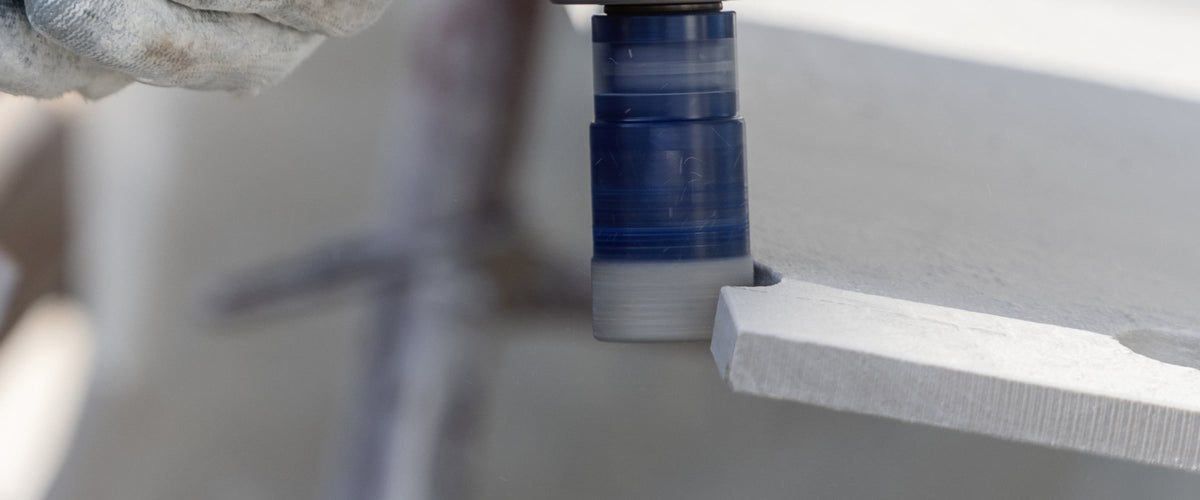
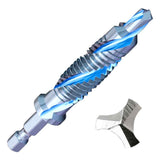
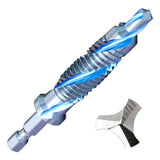
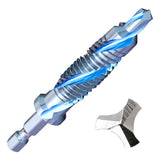
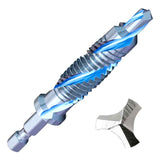
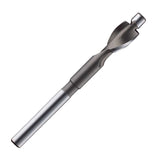
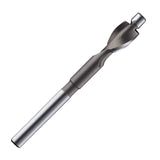
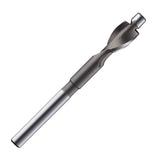
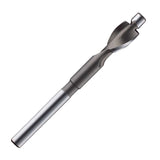
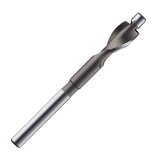
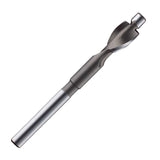
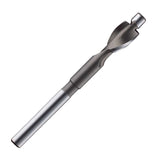
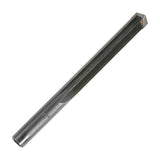
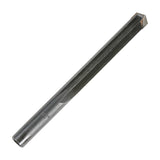
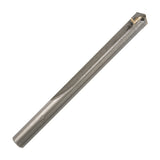
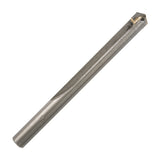
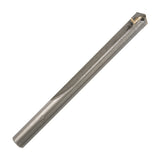
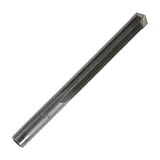
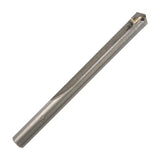
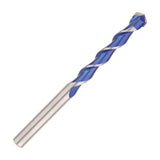
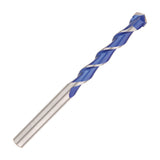
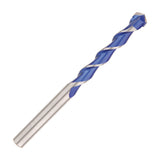
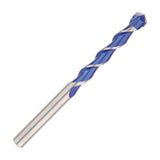
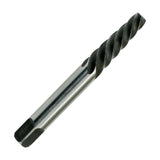
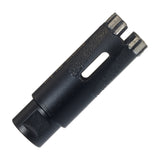
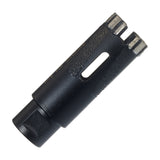
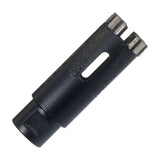
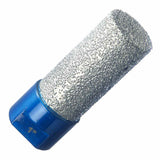
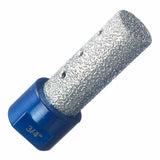
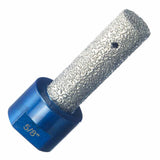
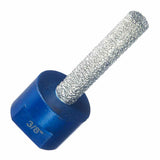
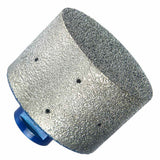
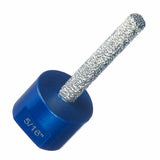
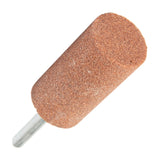
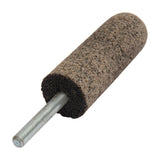
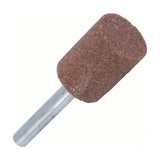
A diamond end mill cuts with its side, so it can widen, reshape or join holes, which a core bit can't do. A core bit only cuts a ring straight down, at one size. Once a hole exists, a core bit has no center to start on and skates across the glaze. The end mill (ITM calls it a diamond milling cutter; some sellers say milling bit or finger bit) is a solid diamond-coated post. You put it into the hole and lean it gently into the wall you want to remove, and it grinds sideways like a router bit in wood.
All eight of our sizes share one body: 2-7/8 in. long, vacuum-brazed #45/50 diamond grit, rated wet or dry. Only the diameter changes. Pick the largest one that fits inside the hole you're starting from, because a bigger mill removes stone faster and leaves a smoother curve. Use a small one (1/4 or 5/16 in.) for tight inside corners and notches.
Do I need to countersink holes in porcelain, and how?
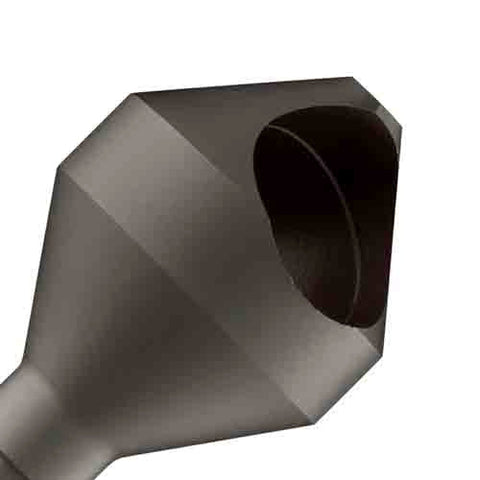
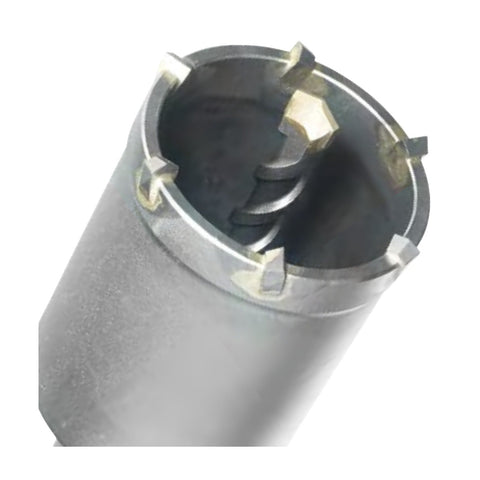
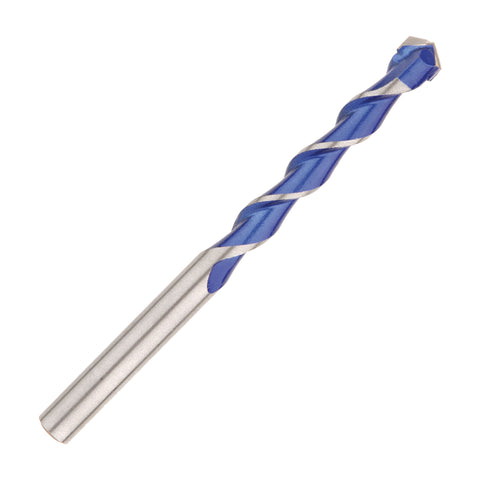
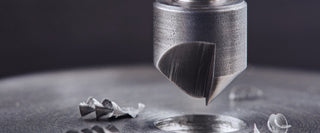
Yes, countersink every visible hole in porcelain or stone that a screw, anchor or trim will press against. You'll read online that countersinking porcelain cracks it. What actually cracks it is a screw head pressing on the raw, chipped glaze ring a drill bit leaves behind. A diamond countersink grinds that ring into a smooth bevel, so the load spreads out and there's no chip edge for a crack to start from. That's why our frameless shower door guide says to countersink every hinge hole.
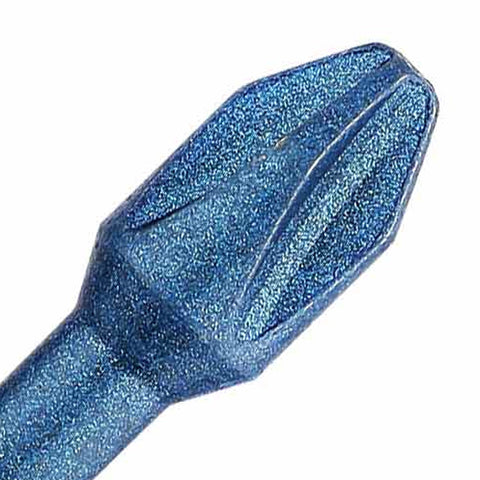
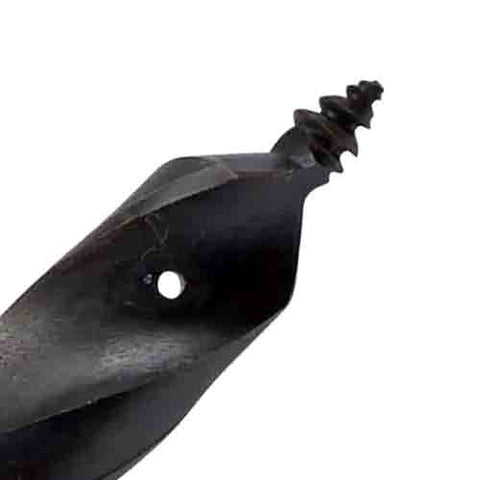
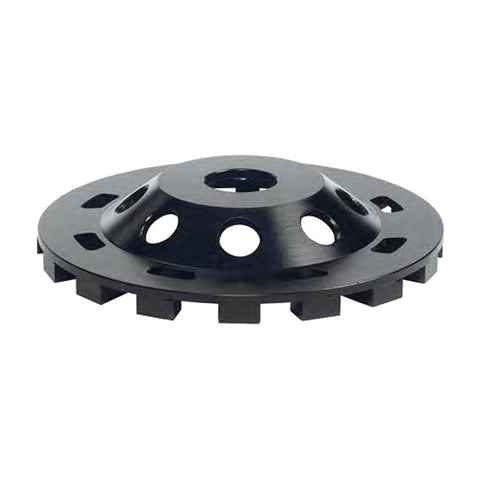
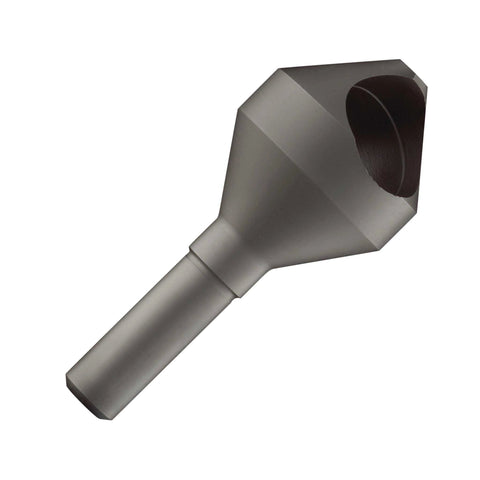
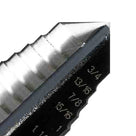
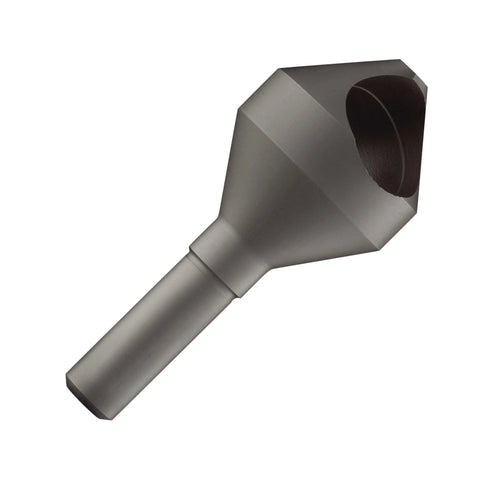
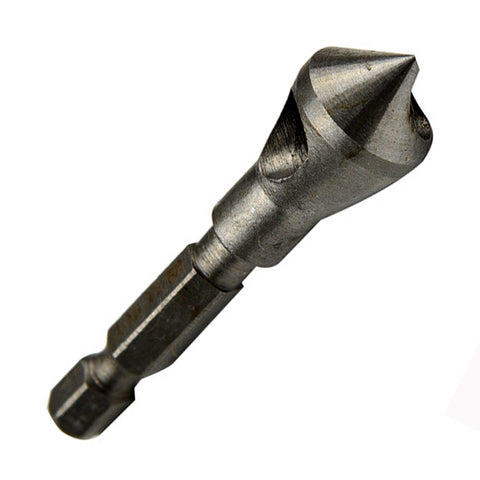
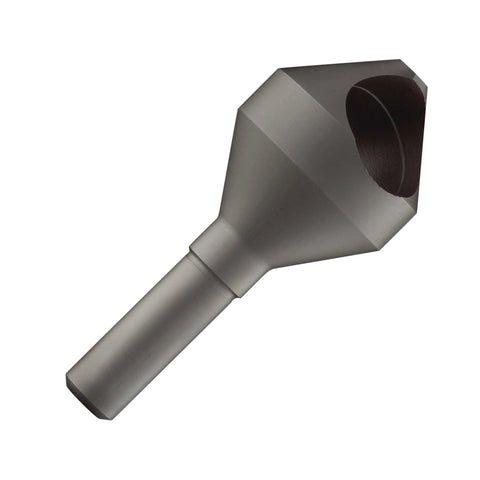
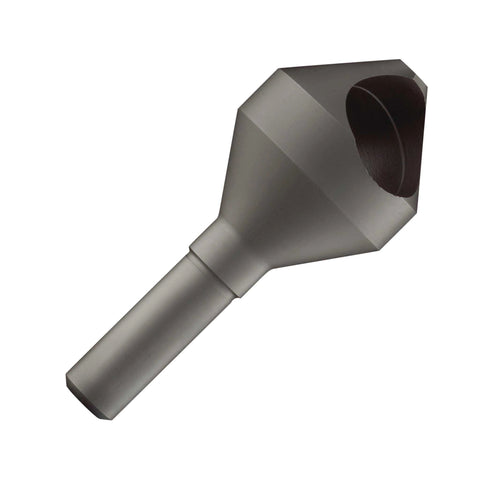
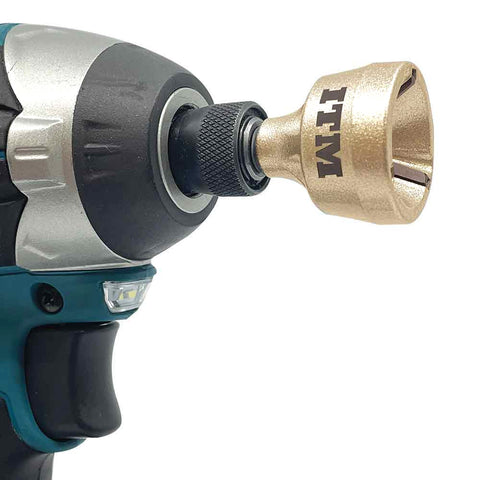
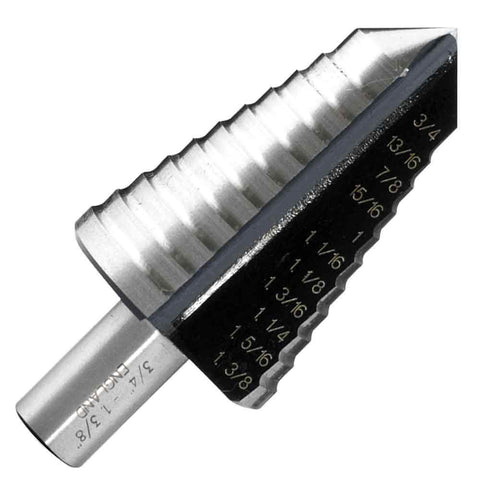
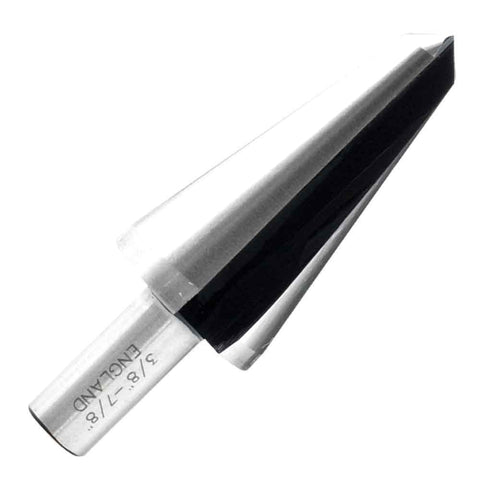
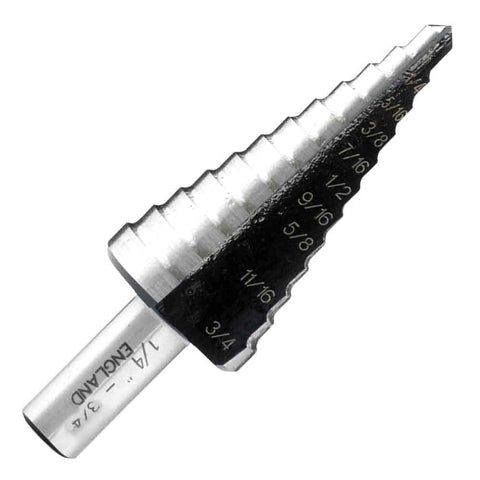
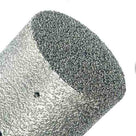
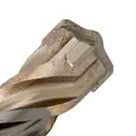
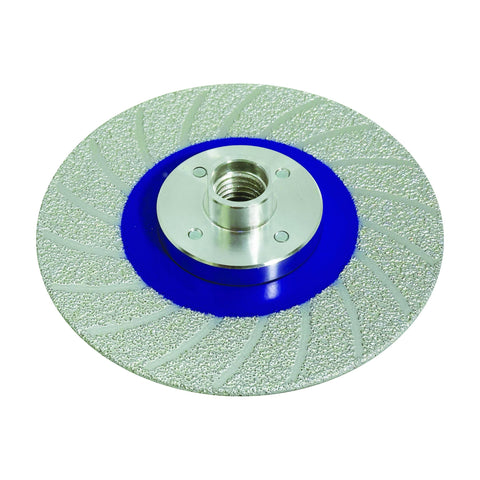
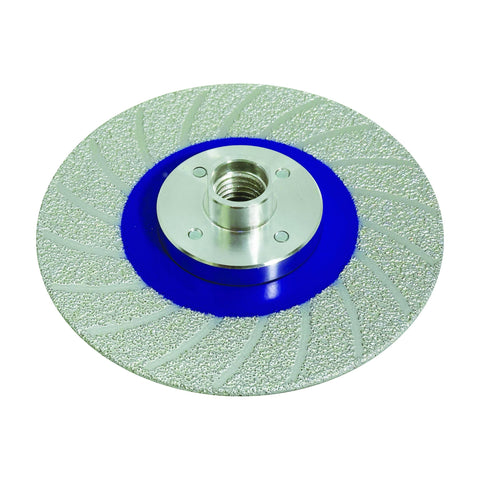
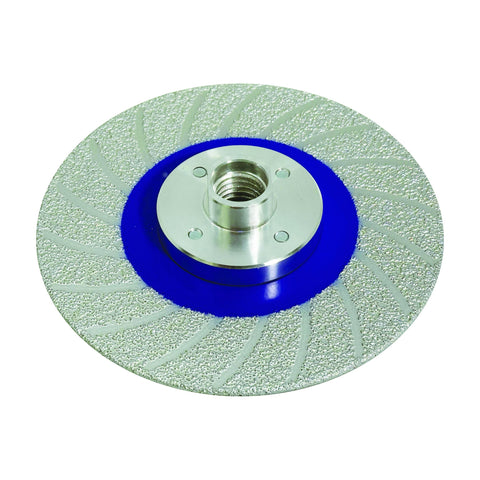
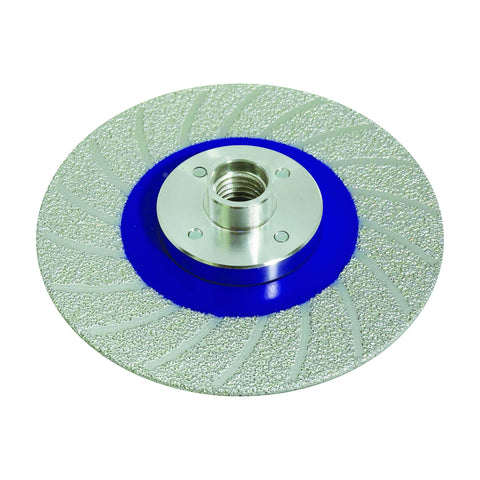
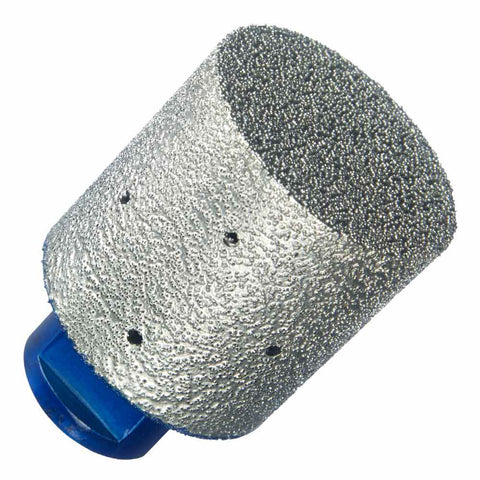
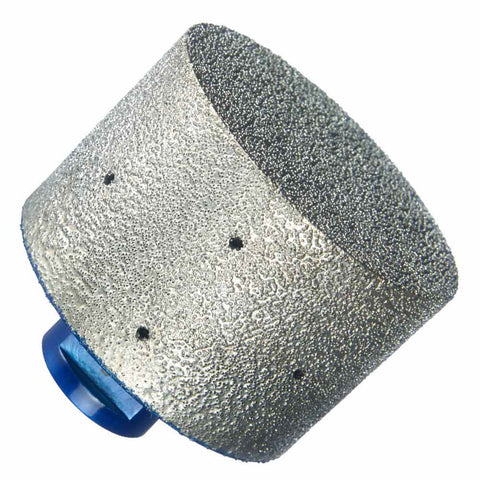
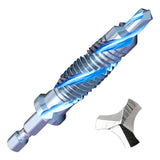
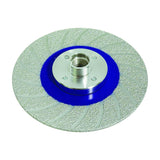
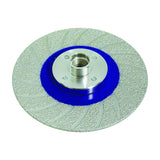
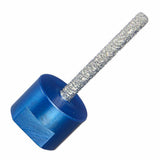
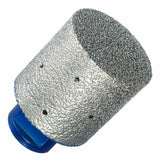
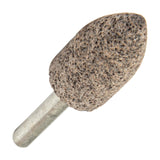
Match the countersink to the hole. The VT-1 fits 3/16 and 1/4 in. anchor holes and goes in a drill or impact driver. The POINT cones cover 3/16 in. up to 3 in. on a grinder.
Two or three light turns. You want a bevel about as deep as the glaze, so the screw head or anchor collar sits flush. Going deeper doesn't help.
Keep it square to the face. A tilted cone grinds a lopsided bevel that shows under trim.
Snug, don't crank. Even on a clean bevel, finish the last turn of a hinge screw by hand.
For metal, a countersink is a different tool with cutting flutes; see Counterbore vs Countersink.
Which size end mill or countersink do I need?
For an end mill, choose the largest size that fits inside the hole you have now. For a countersink, choose the one whose range includes the hole's final size. Every size we stock is below, with the price, minimum and what it runs on.
SKU |
Tool |
Size (in.) |
Mount |
Runs on |
Price |
Pack / min |
|---|---|---|---|---|---|---|
Countersink |
3/16 – 1/4 |
1/4" hex |
Drill, impact driver |
$13.64 each |
1 / min. 4 |
|
Countersink |
3/16 – 1-3/8 |
5/8"-11 |
Grinder; drill or SDS with adapter |
$50.21 each |
1 |
|
Countersink |
1 – 1-7/8 |
5/8"-11 |
Grinder; drill or SDS with adapter |
$66.96 each |
1 |
|
Countersink |
1-7/8 – 3 |
5/8"-11 |
Grinder; drill or SDS with adapter |
$111.84 each |
1 |
|
End mill |
1/4 |
5/8"-11 |
Grinder; drill or SDS with adapter |
$28.07 each |
1 / min. 2 |
|
End mill |
5/16 |
5/8"-11 |
Grinder; drill or SDS with adapter |
$27.88 each |
1 / min. 2 |
|
End mill |
3/8 |
5/8"-11 |
Grinder; drill or SDS with adapter |
$36.08 each |
1 |
|
End mill |
5/8 |
5/8"-11 |
Grinder; drill or SDS with adapter |
$38.32 each |
1 |
|
End mill |
3/4 |
5/8"-11 |
Grinder; drill or SDS with adapter |
$41.80 each |
1 |
|
End mill |
1 |
5/8"-11 |
Grinder; drill or SDS with adapter |
$45.32 each |
1 |
|
End mill |
2 |
5/8"-11 |
Grinder; drill or SDS with adapter |
$62.72 each |
1 |
|
End mill |
3 |
5/8"-11 |
Grinder; drill or SDS with adapter |
$83.64 each |
1 |
|
Core |
1/4 |
1/4" hex |
Drill, impact driver |
$15.22 each |
1 / min. 4 |
|
Core |
1-3/8 |
5/8"-11 |
Grinder (tile) |
$25.52 each |
1 / min. 2 |
|
Core |
1-3/8 |
5/8"-11 |
Grinder (countertop, dry only) |
$69.81 each |
1 |
|
Core |
1-1/4 |
5/8"-11 |
Grinder (countertop, dry only) |
$65.05 each |
1 |
|
Core |
1-1/2 |
5/8"-11 |
Grinder (countertop, dry only) |
$76.16 each |
1 |
|
Adapter |
— |
5/8"-11 to 3/8" hex |
1/2 in. drill |
$11.64 each |
1 / min. 4 |
|
Adapter |
— |
SDS-Plus to 5/8"-11 |
SDS-Plus, rotation only |
$27.60 each |
1 / min. 2 |
|
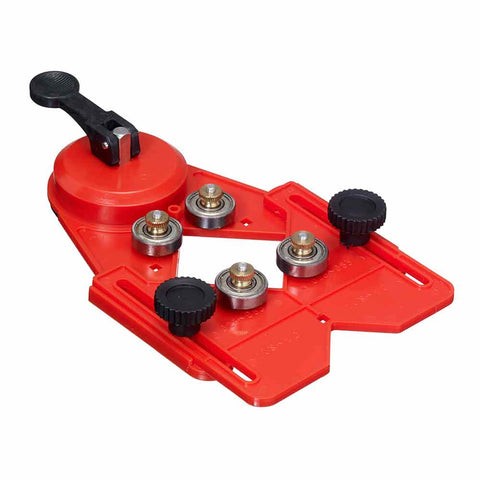
Drill guide |
5/32 – 3-1/4 |
— |
Any |
$33.34 each |
1 / min. 2 |
Prices from our catalog on Oct 26, 2026. Minimums are per order, not a box. Shop all tile end mills and diamond countersinks.
Can I run a diamond end mill on a drill, or do I need an angle grinder?
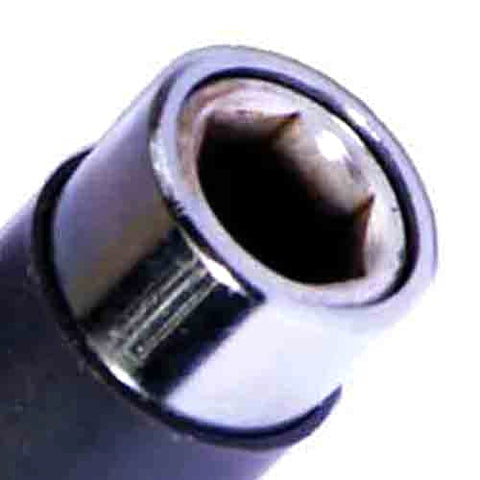
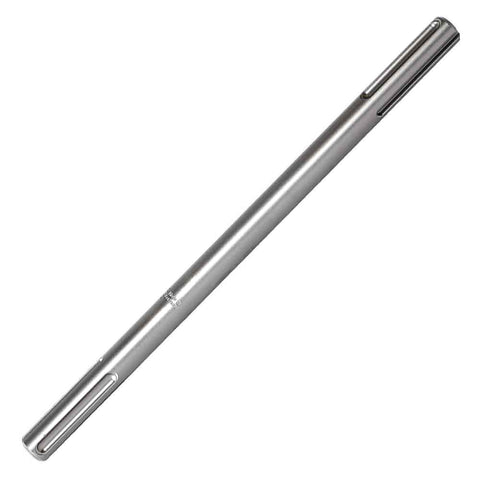
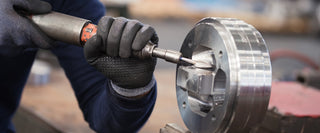
An angle grinder runs them best, but a drill works with the right adapter. Every ITM end mill, POINT countersink and stone core threads onto a 5/8"-11 spindle, which is the thread on most 4-1/2 and 5 in. grinders. A drill chuck can't grip a threaded hole, and that's the part most online answers leave out.
Your tool |
End mills and POINT countersinks |
VT-1 |
|---|---|---|
Angle grinder (5/8"-11) |
Threads straight on, no adapter |
Doesn't fit; use a drill |
1/2 in. drill |
PAD-5811 adapter (5/8"-11 to 3/8" hex), high gear |
Straight in |
SDS-Plus rotary hammer |
ADA002 adapter, rotation only, never hammer |
Doesn't fit |
Impact driver |
No: impacts chip the edge you're trying to clean |
Straight in, light trigger |
Rotary tool (Dremel type) |
No: these tools are sized and threaded for a grinder |
No |
How do I drill and finish a hole in a granite or quartz countertop?
To drill a hole in a granite countertop, core it at the fixture's size with a stone core bit, then countersink the top edge so the faucet's base sits on a smooth bevel instead of a chipped rim. Check the fixture's spec sheet first. Most single-hole kitchen faucets want about 1-3/8 in., and soap dispensers and air gaps usually fall between 1-1/4 and 1-3/8 in. If the hole is already there and too small, mill it out with the largest DMC end mill that fits inside it.
Check underneath. Clear the sink clips, the cabinet face frame and the plumbing, and leave room for the fixture's mounting nut.
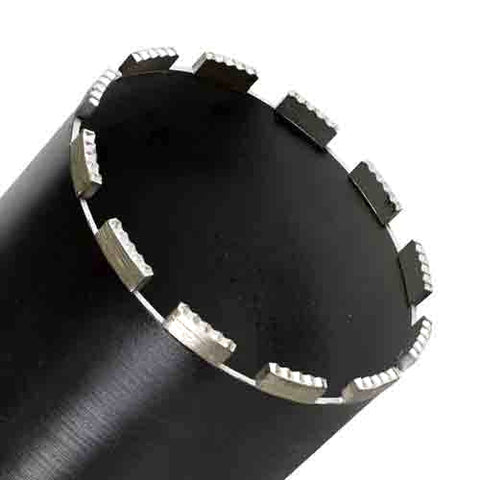
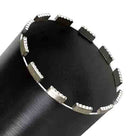
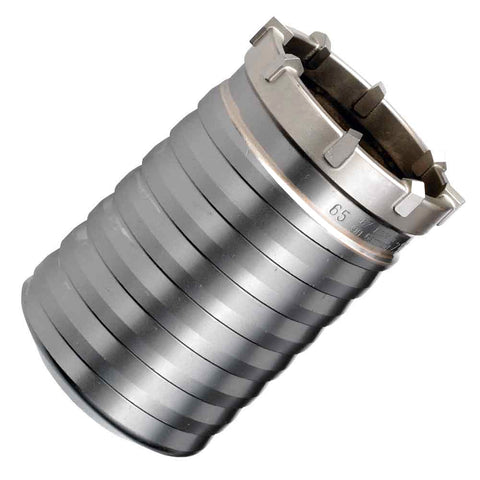
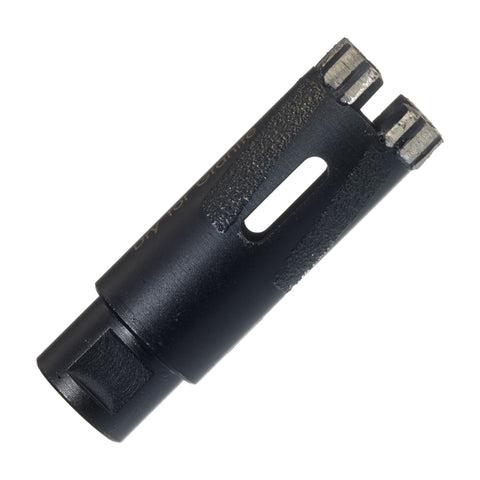
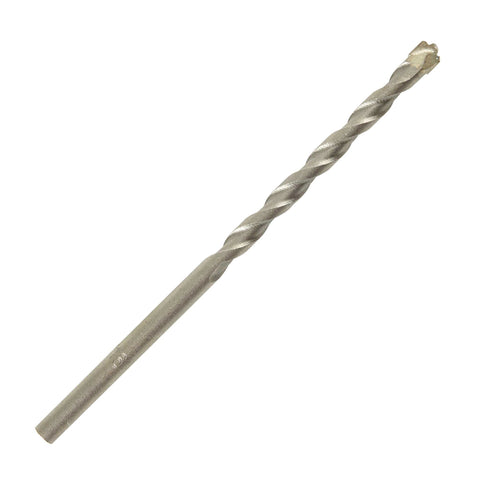
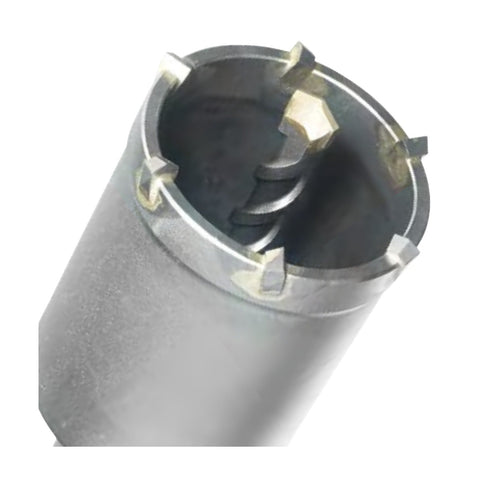
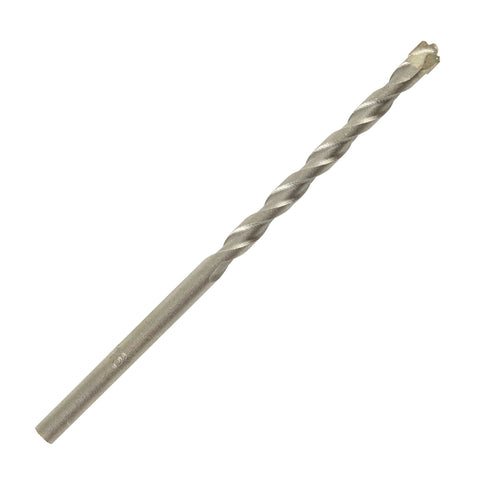
Core it. Our GRA stone countertop cores (1 to 4 in.) thread onto a grinder; the 1-3/8 in. GRA-11 cuts 2-1/2 in. deep, enough for a standard slab. ITM rates them dry only, so don't run water through them. Use a drill guide or a plywood template to start without skating.
Countersink the top edge. POINT-1 or POINT-2 for a 1-3/8 in. hole.
Too small? Mill to the line with a DMC-25 (1 in.) inside a 1-1/4 in. hole, then countersink again.
Quartz is a different stone. Engineered quartz is mostly crystalline silica, and cutting it dry makes the dust that causes silicosis. If you drill quartz with a dry-rated core, capture the dust at the bit with a HEPA vacuum and wear a respirator rated for silica. Our California quartz ban guide explains the rules that are coming.
Why did the tile chip or crack while I was enlarging the hole?
Tile chips or cracks during enlarging for three reasons: too much pressure, the wrong motion, or an unsupported web of tile. Fix the cause and the next hole goes clean.
What happened |
Why |
Fix |
|---|---|---|
Hairline crack running from the hole |
Levering the mill against the tile like a pry bar |
Light sideways pressure; let the grit cut. Check for cracks with a flashlight before you start. |
Chips around the top edge |
Mill entering at full force, or no finishing pass |
Start inside the hole, then countersink the top edge last. |
Notch snapped off at the tile edge |
Thin web of tile left unsupported |
Clamp the tile face up on a flat board and support the web while you mill. |
Mill stopped cutting |
Grit glazed over from heat |
A few seconds in a soft brick or a dressing stone exposes fresh diamond. Use a little water on long runs. |
Hole wandered off the line |
Following the mill, not the mark |
Mark on tape with a fine marker and take small bites toward the line. |
From the shop floor
“Porcelain doesn’t crack at random. It cracks because of pressure, motion or a lack of support. Get those right with your tile end mill, finish with a diamond countersink, and every hole goes clean.”
David Castro, President, Eldorado Tools
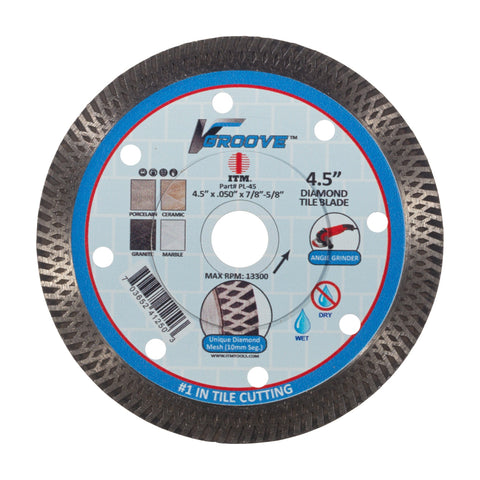
Doing the whole shower? Small anchor holes that go through tile into the wall behind are a V-Groove bit's job (guide coming soon). For the drilling side, see How to Drill Through Tile and Porcelain.
FAQ
Can I enlarge a hole in tile that's already on the wall?
Yes. A diamond end mill works from inside the hole, so the tile can stay set. Protect the valve or pipe behind it, keep the pressure sideways and light, and countersink the edge when you're done.
Can I use a Dremel to cut a hole in tile?
For a soft ceramic wall tile and a small hole, maybe. For porcelain or stone at pipe sizes, a rotary tool is too small and too slow, and its tiny bits glaze over fast.
What kind of bit do I need to drill a hole in granite?
A diamond core bit sized to the fixture, such as a 1-3/8 in. GRA-11 for a standard faucet. Carbide and masonry bits won't cut granite cleanly.
How do I enlarge a sink or faucet hole in granite?
Mill it to a marked line with the largest DMC end mill that fits inside the hole, then countersink the top edge. Take small bites and stop often to check the fit.
How much does it cost to drill a hole in a granite countertop?
Tool cost is a core bit ($57 to $156 by size for our GRA cores) plus a countersink ($50 to $67 for the sizes faucets use). A fabricator visit usually costs more than both, and you keep the tools for the next hole.
En español: ¿cómo agrandar un agujero en porcelanato?
Use una fresa de diamante (end mill) que entre en el agujero actual. Trabaja de lado, como una fresa de router: marque la línea y desgaste poco a poco, sin palanca y sin percusión. Después pase un avellanador de diamante para dejar el borde liso. Nuestras fresas ITM van de 1/4 a 3 pulgadas y se enroscan en una esmeriladora (5/8"-11), o en un taladro con adaptador.
Questions on a job? Call or email us and a person who has used these tools will answer.
Sources: ITM product specifications for DMC, POINT, VT-1, GRA, PAD-5811 and ADA002; Eldorado Tools catalog and order history.
Change log: Oct 26, 2026, first draft.