









































































































































































HomeBlog & GuidesGuidesElectrical
Diamond Blades: Segmented, Turbo, Continuous Rim, Which Saw
Segmented, turbo or continuous rim: the diamond blade for concrete, tile and stone, and the size that fits your grinder, tile saw or cut-off saw.
Quick answer: Pick a diamond blade by what you cut, then by your saw. Segmented rims cut concrete, block and brick fastest. Turbo rims cut almost as fast with a cleaner edge. For porcelain, tile and stone countertops, use a smooth rim: thin turbo mesh or a continuous brazed rim. Then match size, arbor and speed: 4-1/2 in. (13,300 RPM) on a grinder, 10 in. on a 5/8 in. arbor on a tile saw, 14 in. on a 1 in. or 20 mm arbor on cut-off and walk-behind saws.
What is the difference between segmented, turbo and continuous rim diamond blades?
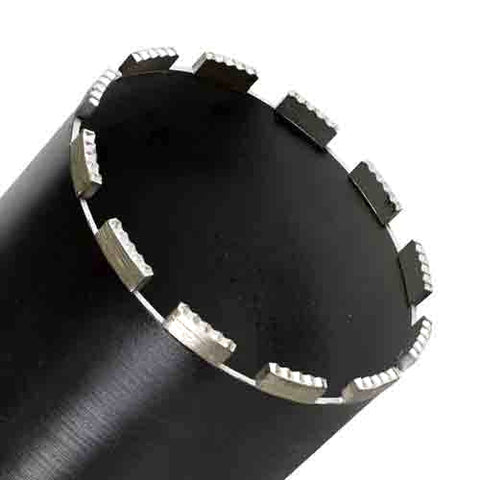
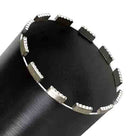
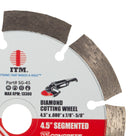
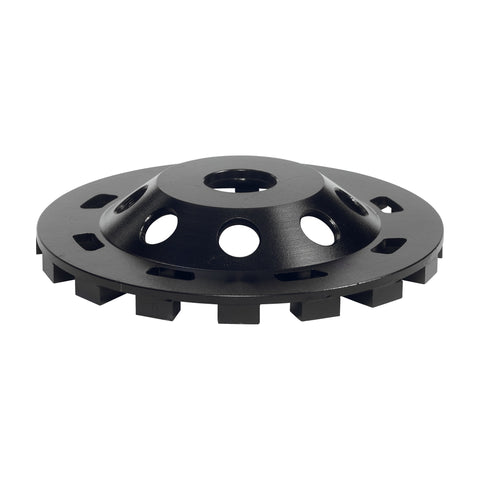
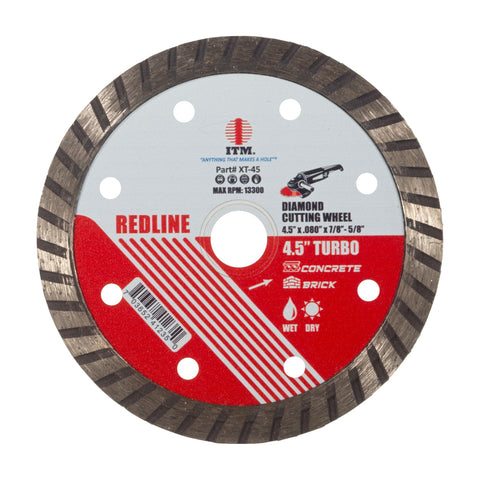
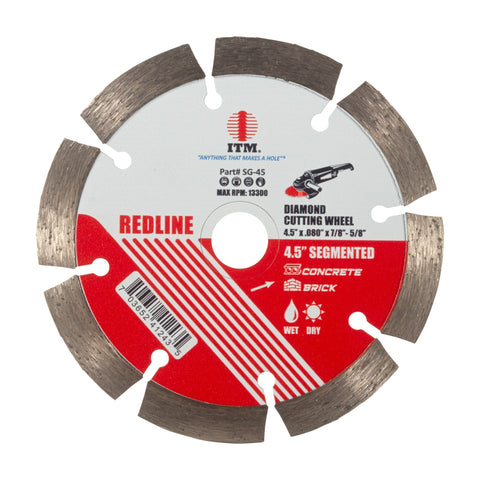
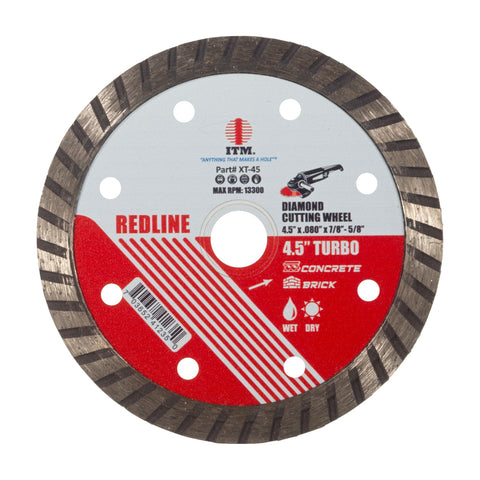
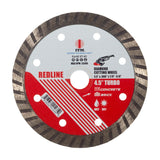
The difference between segmented, turbo and continuous rim diamond blades is the shape of the rim, and the rim decides speed against edge quality. A diamond blade has no teeth. Industrial diamonds sit in a metal bond on the rim and grind through hard material. Gaps in the rim clear dust and let air cool the blade, so more gaps cut faster and rougher. A smooth rim cuts slower and leaves a clean edge.
Rim |
What it looks like |
Speed and edge |
Best for |
Our blades |
|---|---|---|---|---|
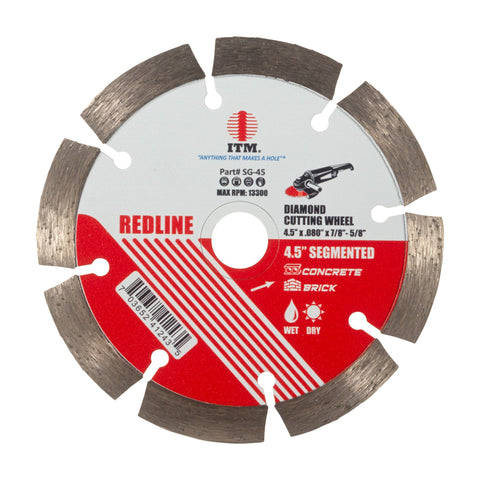
Segmented |
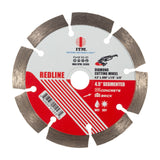
Separate segments with slots between them |
Fastest, roughest edge; runs cool dry |
Concrete, block, brick, rough stone |
|
Turbo |
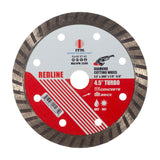
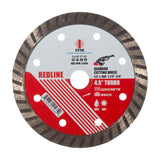
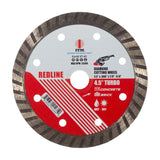
One continuous, serrated rim |
Nearly as fast, cleaner edge |
Brick, pavers, stone, concrete where the edge shows |
|
Turbo mesh (thin) |
Continuous rim with a fine mesh pattern, very thin kerf |
Smooth, low chipping |
Porcelain, ceramic, granite, marble |
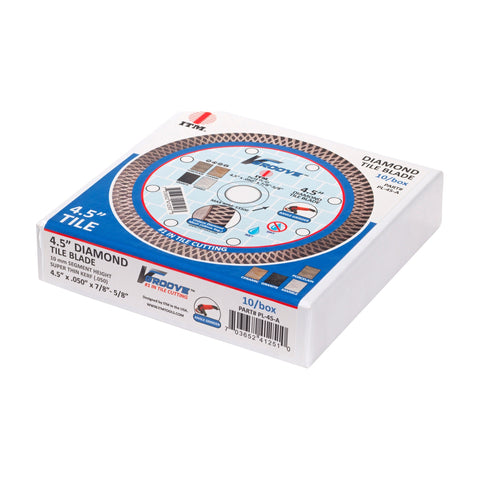
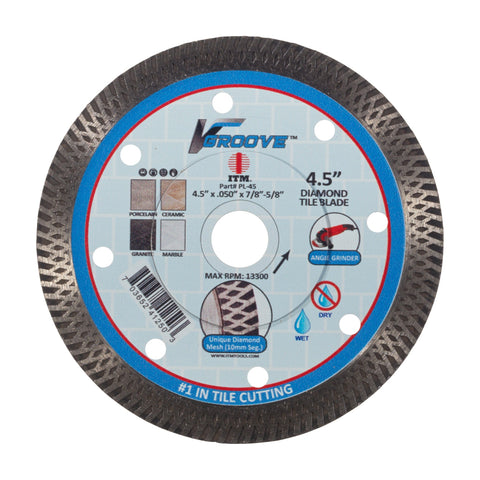
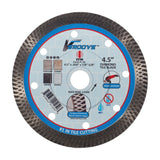
PL-45 4-1/2 in. (0.050 in. kerf), PL-10 10 in. (0.063 in. kerf) |
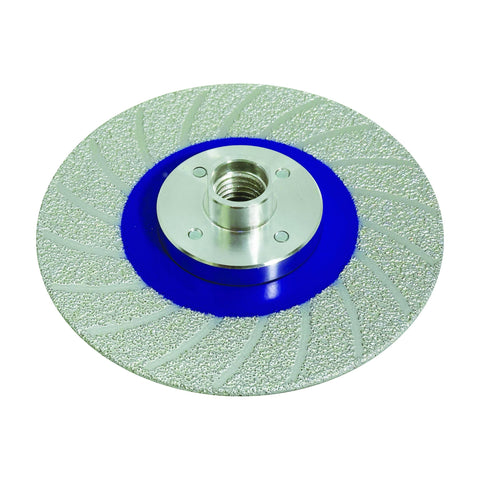
Continuous rim |
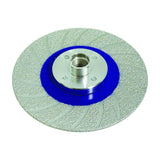
Smooth, solid rim |
Slowest, cleanest edge |
Porcelain, glass tile, stone countertops |
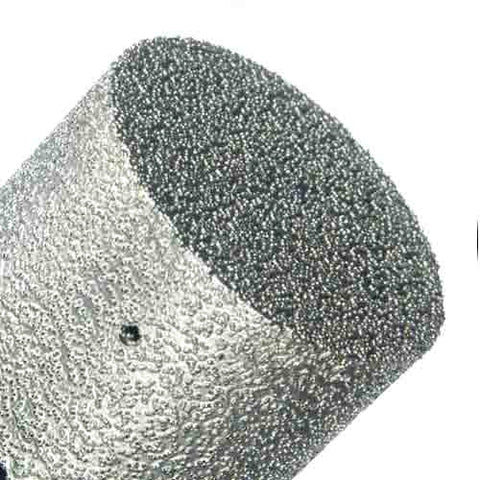
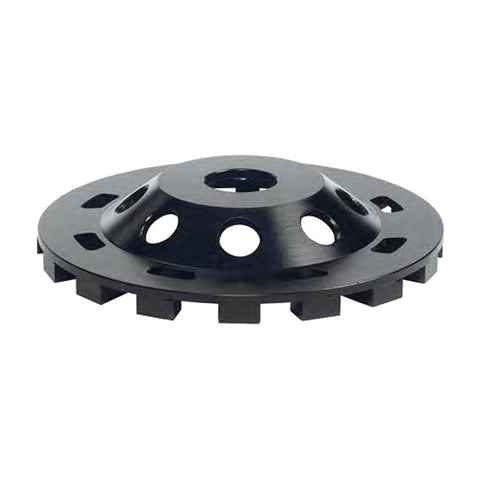
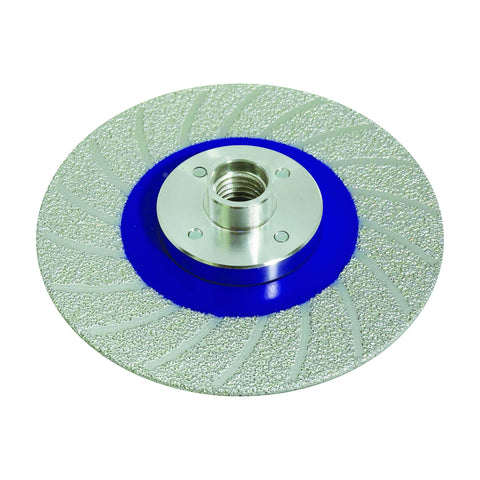
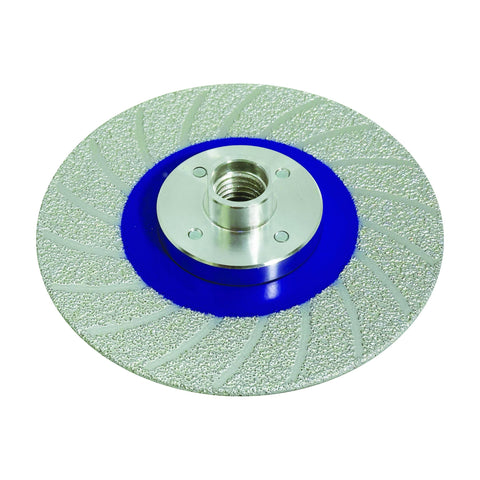
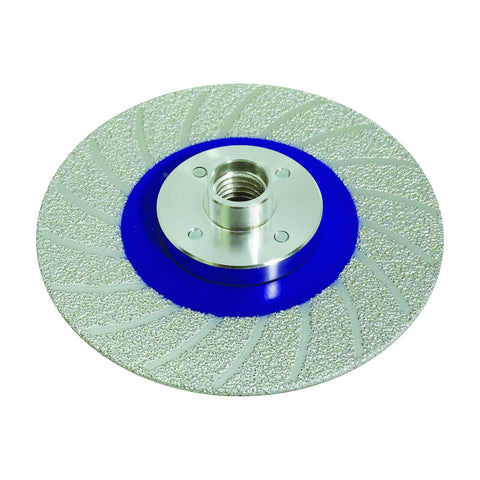
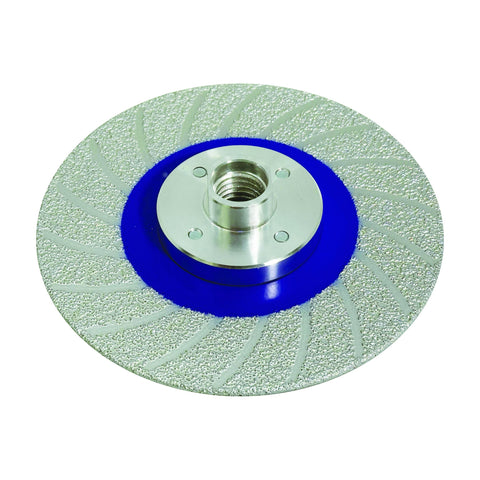
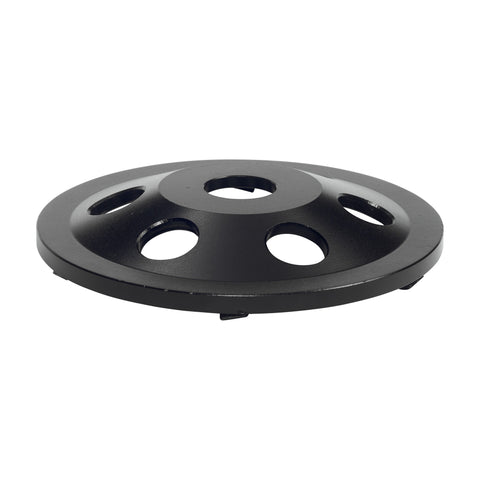
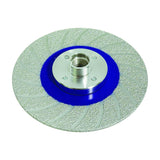
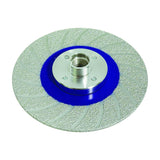
DDD brazed discs, 4 to 9 in. (angle grinders only) |
A rule worth keeping: never put a smooth-rim tile blade on thick concrete. With no gaps to clear the dust, it heats up and glazes. And never put a segmented blade on porcelain. The segments strike the glazed face and chip it.
Which diamond blade should I use for each material?
Use a segmented or turbo diamond blade for concrete, block, brick and pavers, a thin turbo-mesh or continuous-rim blade for tile and stone, and a brazed blade for anything with steel in it. The table below gives the blade for each material and each saw. Every blade in it is an ITM blade rated for wet or dry cutting.
What you cut |
Rim to use |
Angle grinder or circular saw |
10 in. tile saw |
14 in. cut-off, walk-behind or masonry saw |
|---|---|---|---|---|
Concrete, block, brick |
Segmented |
Wrong saw for the job |
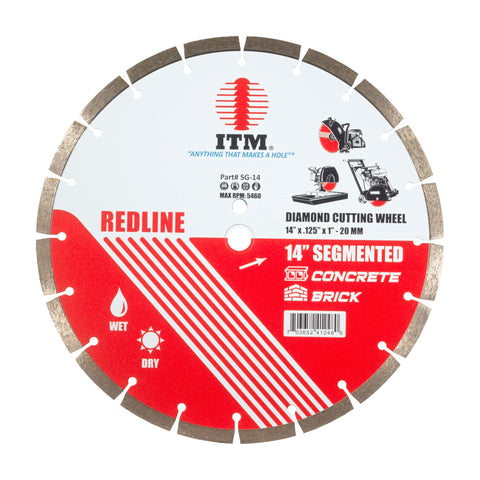
SG-14 general use |
|
Pavers, brick, stone with a clean edge |
Turbo |
Wrong saw for the job |
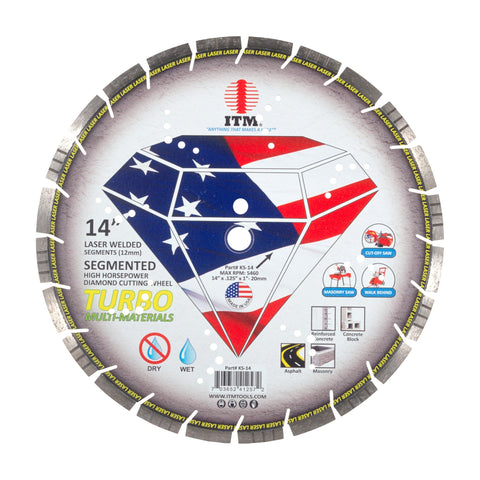
KS-14 turbo segments |
|
Reinforced concrete, all day |
Laser-welded turbo segments |
Use a 14 in. saw |
Wrong saw for the job |
KS-14 heavy duty |
Concrete, block, asphalt and masonry on one job |
Multi-material turbo segments |
Use a 14 in. saw |
Wrong saw for the job |
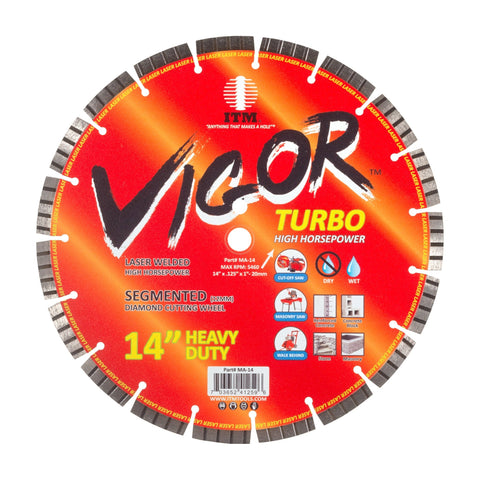
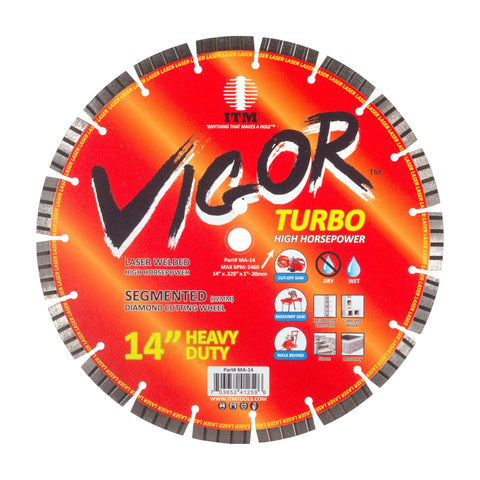
MA-14, made in the USA |
Porcelain and ceramic tile |
Thin turbo mesh or continuous rim |
Too big for tile |
||
Granite, marble, quartz countertops |
Thin turbo mesh or continuous rim |
Too big for countertops |
||
Old mortar joints |
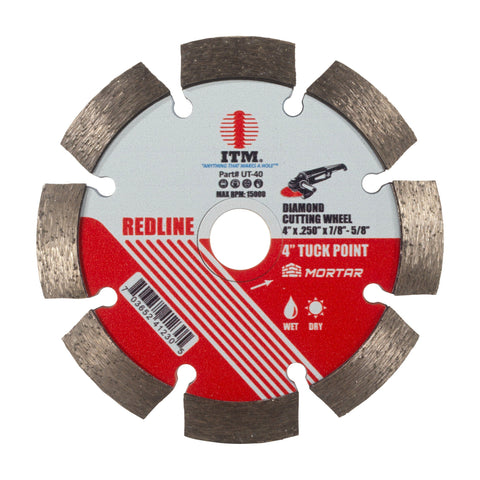
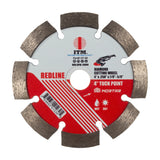
Tuck point, 1/4 in. kerf |
UT-40 4 in., grinder only |
Wrong saw for the job |
Wrong saw for the job |
Steel, cast iron, rebar, PVC, plus the concrete around them |
Brazed diamond (rescue blade) |
Use a cut-off wheel |
Wrong saw for the job |
CC-14 demo rescue |
Pick what you cut and your saw to see the blade, its size and its price:
Shop every size in our diamond blades collection.
Which diamond blade fits my saw?
The diamond blade that fits your saw matches three numbers: diameter, arbor and speed. The diameter must fit under the guard. The arbor hole must fit the spindle. The blade's maximum RPM must be at or above the saw's no-load speed, which is on its data plate.
Saw |
Blade size |
Arbor |
Our blades are rated |
Our blades |
|---|---|---|---|---|
4 in. angle grinder |
4 in. |
7/8 in. or 5/8 in.; DDD threads on 5/8-11 |
15,000 RPM |
|
4-1/2 in. angle grinder or small circular saw |
4-1/2 in. |
7/8 in. or 5/8 in.; DDD threads on 5/8-11 |
13,300 RPM |
|
5 in. angle grinder |
5 in. |
5/8-11 thread |
12,000 RPM |
|
7 in. angle grinder or 7-1/4 in. circular saw |
7 in. |
7/8 in. or 5/8 in.; DDD threads on 5/8-11 |
8,730 RPM |
|
9 in. angle grinder |
9 in. |
5/8-11 thread |
6,790 RPM |
|
10 in. wet tile saw |
10 in. |
5/8 in. |
6,115 RPM |
|
14 in. cut-off saw, walk-behind saw or masonry saw |
14 in. |
1 in. or 20 mm (bushing included) |
5,460 RPM |
Speed ratings and arbors from ITM's specifications for each blade. Every 14 in. blade ships with a brass bushing, so the same blade fits a 1 in. spindle or a 20 mm spindle, which many 14 in. gas cut-off saws use. A wheel spun faster than its rating can break apart, so a 7 in. blade (8,730 RPM) never goes on a 4-1/2 in. grinder. We do not stock 7 in. or 8 in. tile saw blades, or walk-behind blades larger than 14 in.; call us for those sizes.
For grinding wheels, cut-off wheels and flap discs for the same tools, see which grinding wheel for angle grinder work.
What is the best diamond blade for a tile saw?
The best diamond blade for a tile saw is a thin-kerf blade with a smooth rim, because porcelain chips wherever a segment strikes it. Our 10 in. tile saw blade is the PL-10: a turbo-mesh rim, a 0.063 in. kerf, a 5/8 in. arbor and a reinforced hub, rated 6,115 RPM. It cuts porcelain, ceramic, granite and marble, wet or dry.
For notches, outlet cutouts and cuts on the wall, the PL-45 puts the same turbo-mesh rim on a 4-1/2 in. angle grinder, with an even thinner 0.050 in. kerf. For an edge that also needs grinding, the DDD-45 double-sided disc cuts on one face and grinds on the other. When one face wears, flip it.
To drill the faucet and grab-bar holes in the same tile, see how to drill through tile and porcelain without cracking it.
Which 14 in. diamond blade cuts concrete with rebar?
A 14 in. diamond blade with laser-welded turbo segments cuts concrete with rebar in it. Our heavy-duty pick is the KS-14. When the cut is mostly steel, such as rebar mats, cast iron pipe or a door frame, use the brazed CC-14 rescue blade instead. All four of our 14 in. blades fit cut-off, walk-behind and masonry saws and are rated 5,460 RPM.
Blade |
Segments |
Kerf |
Built for |
Price per blade |
|---|---|---|---|---|
SG-14 general use |
10 mm segmented |
0.125 in. |
Everyday concrete, stone, brick and masonry |
$76.06 |
KS-14 heavy duty |
12 mm turbo, laser welded |
0.125 in. |
Long days in reinforced concrete and block |
$99.51 |
MA-14 multi-material, made in the USA |
12 mm turbo, laser welded |
0.125 in. |
Reinforced concrete, block, asphalt and masonry without a blade change |
$133.51 |
CC-14 demo rescue |
Brazed diamond, laser welded |
0.142 in. |
Steel, cast iron, rebar and PVC, plus the concrete around them |
$171.57 |
Foundation crews cutting slabs and stem walls will find the rest of the kit in our foundation repair tools guide. To drill through the same rebar, see rebar drill bits.
How much does a diamond blade cost?
A diamond blade costs $10.74 to $171.57 from us, depending on size and job. Small grinder blades are priced per blade, and some have a minimum of 2 or 3. Five of them also come in a sealed box of 10 that brings the price per blade down by 6 to 17%.
Blade |
Single blade |
Minimum |
Box of 10 |
Per blade in the box |
|---|---|---|---|---|
4 in. segmented |
SG-40 $10.74 |
3 |
SG-40-A $100.55 |
$10.06 |
4 in. turbo |
XT-40 $11.82 |
3 |
XT-40-A $108.28 |
$10.83 |
4-1/2 in. segmented |
SG-45 $12.78 |
2 |
SG-45-A $111.90 |
$11.19 |
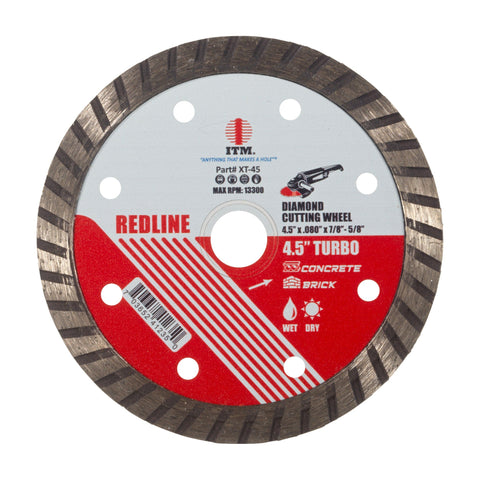
4-1/2 in. turbo |
XT-45 $14.86 |
2 |
XT-45-A $122.98 |
$12.30 |
4-1/2 in. tile (turbo mesh) |
PL-45 $38.53 |
1 |
PL-45-A $341.32 |
$34.13 |
7 in. segmented / turbo |
1 |
None |
None |
|
4 to 9 in. double-sided disc |
1 |
None |
None |
|
4 in. tuck point |
UT-40 $36.06 |
1 |
None |
None |
10 in. tile saw |
PL-10 $111.80 |
1 |
None |
None |
14 in. saws |
1 |
None |
None |
Prices from our product catalog, checked Oct 22, 2026. A crew that goes through a few 4-1/2 in. turbo blades a week saves $2.56 a blade with the box of 10.
Is a more expensive diamond blade worth it?
A more expensive diamond blade is worth it when you cut every day, because a stronger segment bond and taller segments keep cutting longer. For a few feet of cutting, the general-use blade is enough. On our 14 in. blades, the step from SG-14 ($76.06, 10 mm segments) to KS-14 ($99.51) buys 12 mm laser-welded turbo segments. The MA-14 ($133.51) adds asphalt and is made in the USA. Pay for the blade that matches your heaviest regular cut, not your rarest one.
Can I use a diamond blade wet or dry?
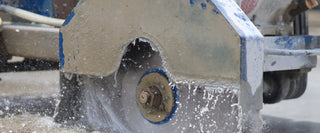
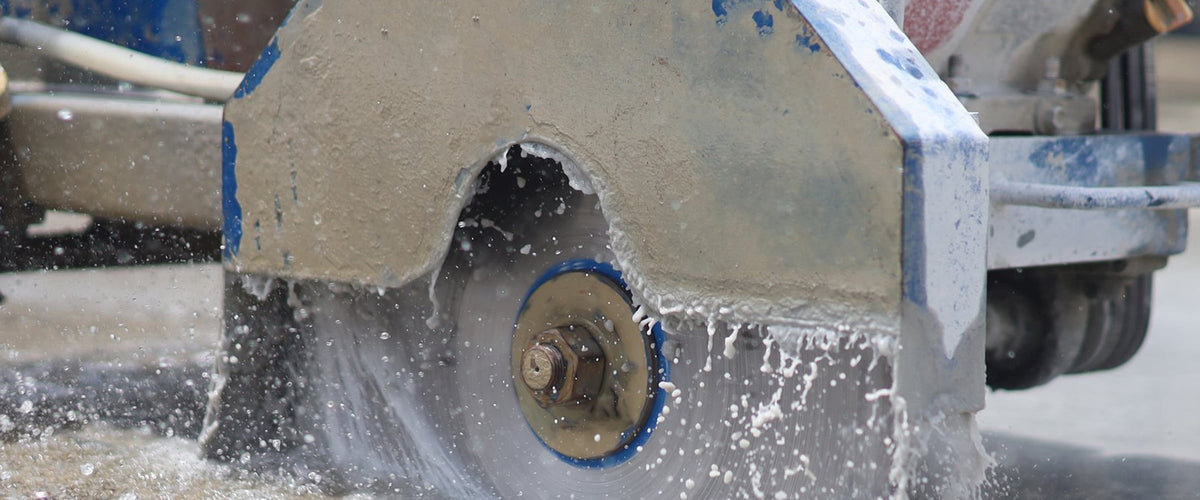
Yes, every diamond blade we sell is rated for wet or dry cutting, but cut wet whenever you can. Water keeps the blade cool, so it glazes less and lasts longer. Water also holds down the dust. Dry-cutting concrete, stone and engineered quartz throws respirable crystalline silica, so use water or a dust extractor with a HEPA filter, and follow your crew's exposure control plan. Our California quartz ban article covers where the rules on engineered stone stand.
Will a diamond blade cut metal?
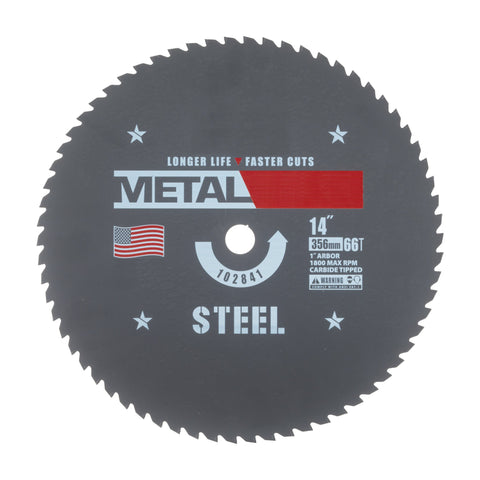
A standard diamond blade will not cut metal well. Concrete and tile blades need abrasive material to wear the bond and expose fresh diamonds. Steel does not do that, so the blade glazes and stops cutting. A brazed diamond blade is the exception: our CC-14 cuts steel, cast iron, rebar and PVC along with the concrete around them. For clean cuts in steel or stainless on a grinder, use a cut-off wheel. Our cut-off wheel guide explains which thickness to buy.
Why did my diamond blade stop cutting?
A diamond blade usually stops cutting because it has glazed: the metal bond has sealed over the diamonds. The fix is to dress it by making a few cuts in an abrasive material.
Problem |
Likely cause |
Fix |
|---|---|---|
Blade slides, smokes, will not cut |
Glazed: the bond has sealed over the diamonds |
Make a few cuts in an abrasive block or soft brick to dress it |
Wears out fast |
Bond too soft for a very abrasive material, or cutting dry for long runs |
Cut wet; use a heavier-duty blade such as KS-14 |
Tile chips along the cut |
Segmented or turbo blade on porcelain, or feeding too fast |
|
Blade wobbles |
Debris on the flanges, a bent flange, or the wrong bushing |
Clean the flanges; fit the bushing that matches the spindle |
Segment cracked or missing |
Twisting in the cut, or the blade overheated |
Stop using the blade; cut straight and let the saw do the work |
Blade glazes on rebar |
Masonry blade on steel |
Switch to the brazed CC-14 |
FAQ
What is a diamond blade used for?
A diamond blade cuts hard, abrasive materials: concrete, block, brick, pavers, stone, tile and asphalt. A brazed blade such as CC-14 also cuts steel and rebar.
Will a diamond blade cut wood?
No. A diamond blade grinds, and wood clogs and burns it. Use a toothed wood blade.
Which way does a diamond blade go on a grinder?
Mount the blade so the arrow printed on it points the same way as the arrow on the grinder or saw guard. A blade mounted backwards wears fast and can lose segments.
How do I know if a diamond blade is dull?
It cuts slowly, smokes or slides, and the rim looks smooth and shiny. Dress it in an abrasive block first. If the segments are worn down near the steel core, replace it.
Can I put a diamond blade on a circular saw?
Yes, if the blade fits the arbor and is rated for the saw's speed. Our 4-1/2 in. and 7 in. segmented and turbo blades fit 7/8 in. or 5/8 in. arbors, and the 7 in. blades are rated 8,730 RPM.
Do you sell continuous rim tile saw blades?
Our 10 in. tile saw blade, PL-10, has a turbo-mesh rim with a 0.063 in. kerf, made to cut porcelain without chipping. Our continuous-rim blades are the brazed DDD discs for angle grinders.
Not sure which blade fits your saw? Call our team at (833) 4-ETOOLS or email sales@eldoradotools.com with the saw's model number.
First published Oct 22, 2026, with prices checked in our catalog that day.