












































HomeBlog & GuidesGuidesElectrical
Pipe Deburring Tool: Inner and Outer Reamers for Conduit
Which inner reamer and outer chamfer fit your EMT, rigid, PVC or copper pipe, sized by the real OD and ID instead of the trade size, with prices.
Quick answer: A pipe deburring tool has two jobs: the burr inside the cut end and the ridge outside it. For 1/2 in. EMT, that means RIM-01 inside ($20.75, minimum 2) and BAR-01C outside ($42.86), both on a 1/4 in. hex for a drill or impact driver. Size by the pipe's real OD and ID, not its trade size: 1/2 in. rigid is 0.840 in. outside and needs BAR-02C. Our inner reamers stop at a 7/8 in. bore.
"Half-inch" is a name, not a measurement. Half-inch EMT is 0.706 in. across the outside. Half-inch rigid is 0.840. Half-inch copper is 0.625. Buy a reamer by the name on the pipe and there's a fair chance it won't fit. This guide works from the real numbers, taken from the pipe makers' own spec sheets, and gives you the exact bit for each edge of each pipe.
Electricians call these conduit reamers. Plumbers say pipe reamer, deburring tool or chamfer tool. The tools in this guide are ITM's Rim Champ inner reamers (RIM) and Bar Champ outer chamfers (BAR). Each one chucks in a drill, so you aren't working a file around every end.
Which pipe deburring tool do I need?
Find your pipe and trade size, then read across. The outside edge gets a BAR outer chamfer sized to the OD, and the inside edge gets a RIM inner reamer sized to the ID. Where two parts fit, the first one listed is the cheaper first order.
| Pipe | Trade size | OD (in.) | ID (in.) | Outside edge | Inside edge |
|---|---|---|---|---|---|
| EMT | 1/2 in. | 0.706 | 0.622 | BAR-01C or BAR-01 or BAR-02C | RIM-01 or RIM-02 |
| EMT | 3/4 in. | 0.922 | 0.824 | BAR-02C | RIM-02 |
| EMT | 1 in. | 1.163 | 1.049 | BAR-02C | None we stock |
| EMT | 1-1/4 in. | 1.510 | 1.380 | BAR-03C | None we stock |
| EMT | 1-1/2 in. | 1.740 | 1.610 | BAR-03C | None we stock |
| EMT | 2 in. | 2.197 | 2.067 | None we stock | None we stock |
| IMC | 1/2 in. | 0.815 | 0.660 | BAR-02C | RIM-01 or RIM-02 |
| IMC | 3/4 in. | 1.029 | 0.864 | BAR-02C | None we stock |
| IMC | 1 in. | 1.290 | 1.105 | BAR-02C | None we stock |
| IMC | 1-1/4 in. | 1.638 | 1.448 | BAR-03C | None we stock |
| IMC | 1-1/2 in. | 1.883 | 1.683 | BAR-03C | None we stock |
| IMC | 2 in. | 2.360 | 2.150 | None we stock | None we stock |
| Rigid (RMC) | 1/2 in. | 0.840 | 0.632 | BAR-02C | RIM-01 or RIM-02 |
| Rigid (RMC) | 3/4 in. | 1.050 | 0.836 | BAR-02C | RIM-02 |
| Rigid (RMC) | 1 in. | 1.315 | 1.063 | BAR-02C | None we stock |
| Rigid (RMC) | 1-1/4 in. | 1.660 | 1.394 | BAR-03C | None we stock |
| Rigid (RMC) | 1-1/2 in. | 1.900 | 1.624 | BAR-03C | None we stock |
| Rigid (RMC) | 2 in. | 2.375 | 2.083 | None we stock | None we stock |
| PVC Schedule 40 | 1/2 in. | 0.840 | 0.622 | BAR-02C | RIM-01 or RIM-02 |
| PVC Schedule 40 | 3/4 in. | 1.050 | 0.824 | BAR-02C | RIM-02 |
| PVC Schedule 40 | 1 in. | 1.330 | 1.064 | BAR-02C | None we stock |
| PVC Schedule 40 | 1-1/4 in. | 1.660 | 1.380 | BAR-03C | None we stock |
| PVC Schedule 40 | 1-1/2 in. | 1.900 | 1.610 | BAR-03C | None we stock |
| PVC Schedule 40 | 2 in. | 2.375 | 2.067 | None we stock | None we stock |
| Copper, Type L | 1/2 in. | 0.625 | 0.545 | BAR-01C or BAR-01 or BAR-02C | RIM-01 or RIM-02 (ITM doesn't list copper) |
| Copper, Type L | 3/4 in. | 0.875 | 0.785 | BAR-02C | RIM-02 (ITM doesn't list copper) |
| Copper, Type L | 1 in. | 1.125 | 1.025 | BAR-02C | None we stock |
| Copper, Type L | 1-1/4 in. | 1.375 | 1.265 | BAR-02C or BAR-03C (at the limit of each) | None we stock |
| Copper, Type L | 1-1/2 in. | 1.625 | 1.505 | BAR-03C | None we stock |
| Copper, Type L | 2 in. | 2.125 | 1.985 | BAR-03C (at its limit) | None we stock |
| Copper, Type M | 1/2 in. | 0.625 | 0.569 | BAR-01C or BAR-01 or BAR-02C | RIM-01 or RIM-02 (ITM doesn't list copper) |
| Copper, Type M | 3/4 in. | 0.875 | 0.811 | BAR-02C | RIM-02 (ITM doesn't list copper) |
| Copper, Type M | 1 in. | 1.125 | 1.055 | BAR-02C | None we stock |
| Copper, Type M | 1-1/4 in. | 1.375 | 1.291 | BAR-02C or BAR-03C (at the limit of each) | None we stock |
| Copper, Type M | 1-1/2 in. | 1.625 | 1.527 | BAR-03C | None we stock |
| Copper, Type M | 2 in. | 2.125 | 2.009 | BAR-03C (at its limit) | None we stock |
OD and ID: EMT, IMC and rigid from Wheatland Tube's EMT and conduit brochure (ANSI C80.3, C80.6, C80.1); copper from the Copper Development Association's Copper Tube Handbook, Tables 14.2B and 14.2C; PVC OD and minimum wall from Wavin's Schedule 40 conduit sheet, with the ID worked out as OD minus two walls. Tool ranges from ITM's 2026 catalog, pp. 30, 31 and 37. An inner reamer is listed only when its cone reaches at least 0.03 in. past the bore, so it can cut a chamfer and not just touch the edge. That margin is our rule, not ITM's.
Look at the right-hand column. By size, our inner reamers cover 1/2 and 3/4 in. EMT, rigid, PVC and copper, and 1/2 in. IMC. ITM's material list for the RIM doesn't include copper, so ask us before you buy one for copper tube. From 1 in. up, and on 3/4 in. IMC, nothing we sell reams the inside. More on that below.
Why does 1/2 inch pipe take different reamers?
Each pipe family is made to its own standard, so the same trade size has a different outside diameter on each one. Copper's OD is always 1/8 in. over its nominal size. EMT is thin-wall steel. Rigid and Schedule 40 PVC come out nearly the same. The small outer chamfer, BAR-01C, tops out at 0.750 in.
| 1/2 in. trade size | OD (in.) |
|---|---|
| Copper, Type L or M | 0.625 |
| EMT | 0.706 |
| IMC | 0.815 |
| Rigid (RMC) | 0.840 |
| PVC Schedule 40 | 0.840 |
Same sources as the fit table above.
How to read the chart: each bar is the outside diameter of one kind of 1/2 in. pipe, in inches. What it means for you: 1/2 in. copper and EMT fit the small BAR-01C (up to 0.750 in.); 1/2 in. IMC, rigid and PVC are too big for it and take the medium BAR-02C.
"Don't buy a reamer by the size printed on the pipe. Half-inch EMT and half-inch rigid aren't the same pipe on the outside, and the bit only cares about the outside."
David Castro, President, Eldorado Tools
Do you have to ream conduit and copper pipe?
Yes, for both trades. In the National Electrical Code, each conduit type's article has a .28 section on cut ends: EMT is 358.28, rigid metal conduit 344.28 and PVC 352.28. As IAEI Magazine sums it up, "all cut edges shall be reamed or otherwise finished to remove rough edges." The inside burr is what can cut wire insulation on a pull. Check the exact wording in the edition your jurisdiction has adopted.
For copper water tube, the Copper Development Association's handbook tells you to "ream all cut tube ends to the full inside diameter of the tube" before soldering. A burr left inside causes turbulence and erosion-corrosion. The same handbook says to remove the outside burr so the tube enters the fitting cup. For press-connect and push-connect fittings, it says to chamfer the outside edge so the tube doesn't damage the fitting's gasket going in.
Inner reamer or outer chamfer: what does each one do?
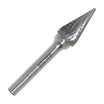
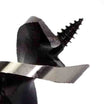
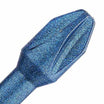
A RIM inner reamer is a 90° cone with one cutting edge, 2 in. long on a 1/4 in. hex shank. You push the point into the pipe and it shaves the burr off the inside lip. A BAR outer chamfer is a cup with blades on the inside. The pipe end goes into the cup, and the blades bevel the outside edge all the way around.
| Part | Cleans | Fits (in.) | Cutting edge | Shank and driver (ITM) | Price | Minimum | First order |
|---|---|---|---|---|---|---|---|
| RIM-01 | Inside edge | 1/8 to 3/4 | 90° cone, M2 HSS | 1/4 in. hex; drill or impact driver | $20.75 | 2 | $41.50 |
| RIM-02 | Inside edge | 3/16 to 7/8 | 90° cone, M2 HSS | 1/4 in. hex; drill or impact driver | $29.52 | 2 | $59.04 |
| BAR-01 | Outside edge | 1/8 to 3/4 | Blades, M2 HSS | 1/4 in. hex; drill or impact driver | $24.98 | 2 | $49.96 |
| BAR-01C | Outside edge | 1/8 to 3/4 | Blades, carbide | 1/4 in. hex; drill or impact driver | $42.86 | 1 | $42.86 |
| BAR-02C | Outside edge | 1/2 to 1-3/8 | Blades, carbide | 3/8 in. hex; 1/2 in. drill | $83.94 | 1 | $83.94 |
| BAR-03C | Outside edge | 1-3/8 to 2-1/8 | Blades, carbide | Hex; ITM doesn't print the size | $149.56 | 1 | $149.56 |
Ranges, cutting edges, shanks and drivers from ITM's 2026 catalog, pp. 30, 31 and 37. ITM lists steel, stainless, aluminum, copper, brass and plastics for every BAR. For the RIM it lists steel, mild stainless, aluminum, cast iron, plastics and wood, and not copper. Prices and minimums from eldoradotools.com, Nov 19, 2026. All six are sold one at a time.
Two edges means two bits. ITM's line has no single drill bit that does both. For 1/2 and 3/4 in. EMT, the set is one RIM-02 for the inside, plus BAR-01C for 1/2 in. and BAR-02C for 3/4 in. on the outside.
HSS or carbide outer chamfer?
The small outer chamfer comes both ways: BAR-01 with M2 high-speed steel blades and BAR-01C with carbide blades. ITM lists the same materials and the same 1/8 to 3/4 in. range for both, and publishes no blade-life figures, so we won't guess at one. The buying difference is the minimum. BAR-01 is $24.98 but sold two at a time ($49.96 to start). BAR-01C is $42.86 and sold one at a time. For one truck, the carbide one costs less to start. Buying for two trucks, the HSS pair is cheaper.
How do you fix cut all-thread so the nut starts?
Run a BAR outer chamfer over the cut end. ITM built the Bar Champ for this job first: it chamfers threaded rod, bolts, rebar and round stock so a nut threads on past a sawn or sheared end. Electricians cut a lot of all-thread for strut trapezes and hangers, and a BAR in the driver fixes the end without a file.
| Rod size | Outer chamfer |
|---|---|
| 1/4 in. | BAR-01C or BAR-01 |
| 5/16 in. | BAR-01C or BAR-01 |
| 3/8 in. | BAR-01C or BAR-01 |
| 1/2 in. | BAR-01C or BAR-01 or BAR-02C (BAR-02C at its limit) |
| 5/8 in. | BAR-01C or BAR-01 or BAR-02C |
| 3/4 in. | BAR-02C or BAR-01C or BAR-01 (BAR-01 and BAR-01C at their limit) |
Rod diameters are nominal. Ranges from ITM's 2026 catalog, pp. 30–31.
For 3/8 and 1/2 in. rod in an impact driver, BAR-01C covers both. BAR-02C also fits 1/2 in. rod and up, but ITM shows it for a 1/2 in. drill only.
What if nothing on this page fits?
Three jobs fall outside these tools, and we'd rather tell you now than sell you a part that won't fit.
- The inside of 1 in. and larger pipe. Our largest inner reamer, RIM-02, reaches 7/8 in. A 1 in. EMT bore is 1.049 in.
- The inside of 3/4 in. IMC. Its 0.864 in. bore leaves RIM-02 only 0.011 in. of cone, too little to cut a chamfer.
- The outside of 2 in. EMT, rigid, IMC and PVC. Those ODs (2.197 to 2.375 in.) are past BAR-03C's 2-1/8 in. limit. 2 in. copper, at 2.125 in., sits right at it.
For those, the Copper Tube Handbook lists a half-round or round file as a reaming tool. Or call us at (833) 4-ETOOLS with the pipe and size and we'll look for a part.
How do you deburr a pipe end with a drill?
- Cut it square. A square end reams evenly. Cutting conduit with a portable band saw? See which band saw blade fits your saw.
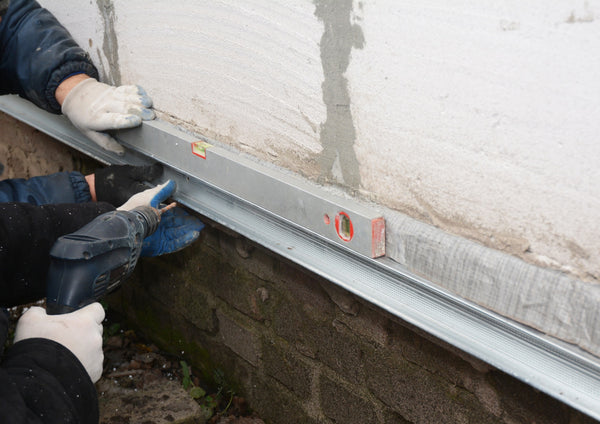
- Ream the inside. Put the RIM's point in the pipe, keep it in line with the pipe and run it until the burr is gone. Stop at the full inside diameter. Going past it only thins the wall.
- Chamfer the outside. Slide the BAR over the end and run it until the ridge is gone and there's a small, even bevel all the way around.
- Clear the chips. Wipe the chips out of the pipe before it goes into a fitting or a wire goes through it.
ITM doesn't publish a speed for these tools, so we don't print one. Check that the reamer is the right size for the pipe before you start; the fit table above has every size.
FAQ
What is a pipe deburring tool?
A tool that removes the sharp lip a saw or cutter leaves on a pipe end. An inner reamer cleans the inside edge and an outer chamfer bevels the outside. Ours chuck in a drill: RIM inner reamers and BAR outer chamfers.
Is a conduit reamer the same as a pipe reamer?
Same job, different trade name. Electricians say conduit reamer, plumbers say pipe reamer. A "pipe reamer" can also mean a PVC socket-saver that drills pipe out of a fitting, which is a different tool we don't sell.
Do I need to ream PVC conduit?
Yes. NEC 352.28 covers cut ends of PVC conduit, and like the other conduit articles it requires rough edges to be removed. At 1/2 and 3/4 in., use RIM-01 or RIM-02 inside, and BAR-02C to bevel the outside.
Will RIM-02 ream 1 in. EMT?
No. 1 in. EMT has a 1.049 in. bore and RIM-02 reaches 7/8 in. We don't stock an inner reamer for 1 in. and larger pipe.
Can I chamfer copper before a push-to-connect or press fitting with a BAR?
Yes, if it fits the OD: BAR-01C for 1/2 in. copper (0.625 in.), BAR-02C for 3/4 and 1 in. ITM lists copper among the BAR's materials, and the Copper Development Association calls for chamfering the outside edge before both fitting types.
Can I use these in an impact driver?
ITM shows RIM-01, RIM-02, BAR-01 and BAR-01C for a drill or an impact driver. BAR-02C is for a 1/2 in. drill. ITM doesn't say for BAR-03C, so use a drill.
Do you sell replacement blades?
No. The blades are part of each BAR head, and we don't stock separate blades for them.
Shop all pipe reamers. Deburring drilled holes instead of pipe ends? See deburring tools for metal. Boring knockouts in a box for the conduit? See step drill bits. For car and bridge reamers, see what is a reamer.
Sources: ITM 2026 catalog, pp. 30, 31 and 37 (ranges, cutting edges, shanks, drivers, materials and uses); Wheatland Tube EMT and conduit brochure (EMT, IMC and rigid OD and ID); Copper Development Association, Copper Tube Handbook A4015-26/24, Tables 14.2B and 14.2C and the soldering, press-connect and push-connect chapters; Wavin Schedule 40 PVC conduit sheet. NEC .28 sections as summarized by IAEI Magazine, "Raceway Systems" (May/June 2014); check the edition your jurisdiction has adopted. Prices from eldoradotools.com on Nov 19, 2026. First drafted Nov 19, 2026.